

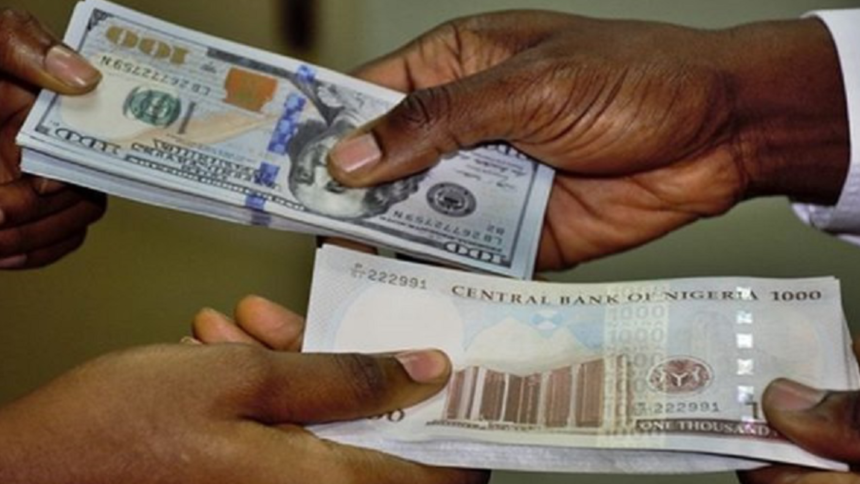
The Nigerian naira ended 2025 on a firmer note, closing at N1,429/$1 on December 31 — a 7.4% appreciation from the N1,535/$1 recorded on the final trading day of 2024.
This is according to official exchange rate data from the Central Bank of Nigeria (CBN).
The 2025 performance marks the naira’s first annual gain since 2012, when it appreciated slightly to N157.29 from N158.99 in 2011.
This is also the first annual gain following 13 years of consecutive decline
Olalekan Adigun by Olalekan Adigun January 1, 2026
The Nigerian naira ended 2025 on a firmer note, closing at N1,429/$1 on December 31 — a 7.4% appreciation from the N1,535/$1 recorded on the final trading day of 2024.
This is according to official exchange rate data from the Central Bank of Nigeria (CBN).
The 2025 performance marks the naira’s first annual gain since 2012, when it appreciated slightly to N157.29 from N158.99 in 2011.
NGX All-Share Index hits record 155,613 points, closes 2025 higher
December 31, 2025
The currency had depreciated every year since then, making this a major turnaround after 13 years of consistent declines.
What the data is saying
CBN data indicate that while the naira remained volatile for much of the year, a significant recovery trend began in the last quarter, especially from September through December.
The currency experienced its weakest stretch in April 2025, closing at N1,602/$1, but began a gradual rebound from May.
By the end of the year, it had strengthened to N1,429/$1, improving from N1,450.01/$1 at the start of December and even lower than its opening rate of N1,538.50/$1 in January.
The naira traded relatively flat in February (N1,499 to N1,500/$1), fell sharply in March and April, but started recovering from May (N1,585/$1) and June (N1,532/$1).
September marked a turning point with the currency trading below N1,500/$1 for most of the month, ending at N1,478/$1.
The rally continued into October (N1,427.5/$1), saw a slight dip in November (N1,446.9/$1), but regained ground to close the year at N1,429/$1.
What they are saying
The first annual gain in about 13 years reflects the impact of foreign-exchange reforms introduced by the Central Bank of Nigeria in 2024.
Since the reforms were implemented, the gap between the official and parallel market exchange rates has narrowed to below 5%, sharply reducing speculative activity and allowing supply-and-demand dynamics to play a more dominant role in price discovery.
Analysts also attribute the naira’s turnaround to a combination of tighter monetary policies, improved FX inflows, and reduced speculative demand in the market.
Ade Omotosho, analyst at Kwik Securities, said: “Reforms in the FX market, including improved price discovery and increased transparency, also helped support the naira in the second half of the year.”
The recovery however, came after a difficult first half of 2025, where high inflation, strong demand for dollars, and delayed FX inflows weighed heavily on the currency.
The recovery however, came after a difficult first half of 2025, where high inflation, strong demand for dollars, and delayed FX inflows weighed heavily on the currency.
Although structural issues remain, the policy response appears to have gained traction in Q4, contributing to the currency’s relative stability by year-end.
What this means
The naira’s performance in 2025 reflects a shift toward greater FX market stability, offering cautious optimism for 2026.
Analysts believe that a stronger close could help restore investor confidence, provided reforms are sustained and inflation is kept in check.
However, long-term resilience will depend on Nigeria’s ability to attract capital, boost exports, and manage monetary policy effectively.
Without consistent follow-through, the naira could still face renewed volatility.
What you should know
The CBN is finalising a revised foreign exchange (FX) manual to deepen participation and improve transparency in the FX market.
In January 2025, the CBN introduced the Nigerian Foreign Exchange (FX) Code to foster ethical conduct among market participants.
The CBN’s 2026 Macroeconomic Outlook projects external reserves to reach $51.04 billion, driven by improved oil revenues, FX reforms, and stronger inflows.