


● Why clatter of hatchet writing, malicious rumours fail to dent his outstanding record
● From Gateway Airport, Olokola Port, road expansion to China partnerships, investors throng Ogun to enjoy policy consistency
● Boom in job creation, infrastructure growth, youth empowerment dispel fabricated lies
History has a way of silencing malice and dubious clamour. It allows the resentful to sneer and the ambitious to scheme, while it calmly records the truth; what was built and what endured through good governance. Yet, in every era of governance, there are those who mistake clamor for consequence and outrage for relevance. They arrive loudly, convinced that repeated lies and insult can undo institution. Yet governance, when anchored in vision and executed with discipline, does not answer to hecklers. It answers to time. Ogun State has entered such a moment. While a small chorus strains to diminish Governor Dapo Abiodun’s peerless achievements, the state itself tells a different story, writes LANRE ALFRED
There are seasons when a man’s work speaks so loudly that all attempts to drown it in mischief collapse under their own weight. This is one such season in Ogun State. As malice sharpens into attacks and commentary slips into contrivance, the state itself rises as the clearest rebuttal, a vast, breathing archive of roads laid, factories humming, ports imagined into being, and global doors flung open by deliberate leadership. Thanks to Governor Dapo Abiodun.
Those who seek to reduce governance to gossip discover, too late, that granite does not yield to noise. What confronts Ogun today is not opposition rooted in ideas or critique sharpened by public interest. It is something smaller and more corrosive, the familiar malice dressed as concern, ambition stunted by greed, and commentary emptied of capacity to recognize progress when it stands in full view.
Such attacks deserve neither panic nor prolonged engagement. They thrive on oxygen, on reaction, on elevation. The wiser response is to let the work speak, because work, when done at scale and with clarity of purpose, renders mischief irrelevant.

Across Ogun State, evidence has risen quietly and steadily, indifferent to insult. From industrial corridors stretching toward Sagamu to diplomatic bridges spanning continents, a story has been written in steel, policy, and foresight. This story does not plead for validation. It simply exists, solid and undeniable, a mirror held up to those who mistake cynicism for intelligence and volume for truth.
Leadership, at its highest register, resists distraction. It understands that every era produces its chorus of detractors, some driven by ideology, others by disappointment, and many by appetite. The last group is always the loudest, because hunger sharpens the tongue. Yet history shows a cruel consistency. While builders labor, detractors tire. While institutions grow, conspiracies rot. Ogun’s present moment fits neatly into this pattern.
The attacks, such as they are, rest on a fragile foundation. They presume that repetition can erase reality, that sneer can supplant substance, that innuendo can undo infrastructure. They underestimate the intelligence of citizens and the permanence of tangible progress. A road once built does not vanish because it is mocked. A factory once commissioned does not fold because it is ignored. An investor once convinced does not flee because of a column laced with bile.
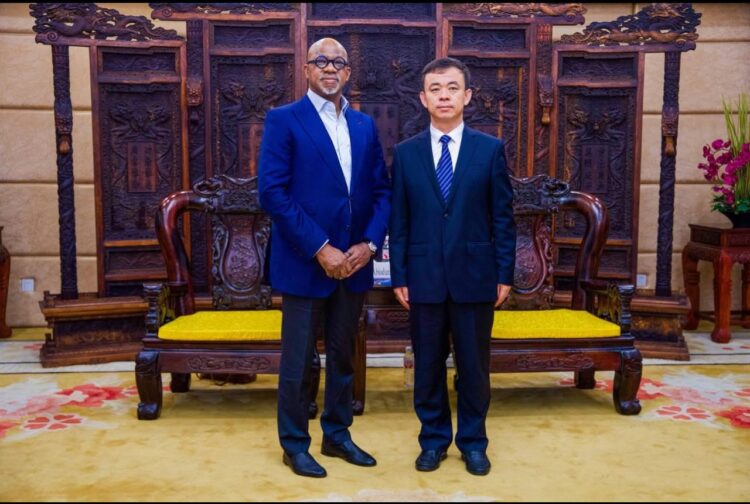
Ogun State has become a study in contrast. On one side stands a leadership immersed in negotiation rooms, factory floors, and planning tables, stitching together an economy that reaches beyond local consumption toward continental relevance. On the other side linger voices trapped in grievance, unable to imagine governance outside the narrow prism of personal gain. The contrast is unflattering, and that discomfort fuels further hostility.
At the center of Ogun’s unfolding narrative stands Abiodun, a governor whose style rejects theatricality in favor of patient execution. His leadership does not announce itself with flamboyance. It advances with calculation, diplomacy, and a relentless focus on positioning Ogun as a node of value in a global economy that rewards preparedness and punishes insularity. This approach has unsettled those accustomed to chaos, because order leaves little room for opportunism.
From the moment Abiodun chose diplomacy as an instrument of development, Ogun’s horizons expanded. His administration recognized early that geography alone confers no destiny. Proximity to Lagos, long cited as Ogun’s advantage, required activation. Roads had to connect, policies had to reassure, security had to stabilize, and governance had to speak the language of investors who measure environments with cold precision. The work began quietly, deliberately, without fanfare.

That work carried the governor beyond Nigeria’s borders, into rooms where decisions are shaped by data and confidence rather than sentiment. When Ogun’s delegation arrived in Rizhao, within China’s Shandong Province, it did so with a clear proposition. Ogun sought partnership anchored in mutual benefit, production, and long-term value. The Shandong Province–Ogun State Economic and Trade Matchmaking Session emerged as a declaration of intent, a signal that Ogun had stepped beyond regional conversation into global reckoning.
The session gathered manufacturers, energy firms, technology leaders, and logistics experts, each evaluating Ogun through the hard lens of feasibility. Abiodun spoke with the assurance of a leader conversant with his state’s strengths, outlining comparative advantages rooted in location, policy coherence, and political will. His words carried neither desperation nor exaggeration. They carried confidence, the currency investors trust.
From conference halls, the journey moved into industrial spaces that offered tangible lessons. At BlueCarbon, rows of solar panels reflected a future Ogun had already begun to imagine. Conversations there revealed alignment between Ogun’s natural endowments and the demands of renewable energy production. Abundant sunlight, silica deposits, and a receptive policy environment converged into a compelling case for local solar manufacturing. Abiodun framed this alignment as opportunity anchored in sustainability, a pathway toward energy security and industrial relevance in a world racing toward cleaner power.
The vision extended beyond electricity. It embraced sovereignty, employment, and resilience. Solar manufacturing in Ogun would mean households powered by local innovation and industries shielded from volatility. Such foresight unsettles critics who mistake governance for spectacle, because spectacle rarely plans beyond applause.
The visit to Rizhao’s automated seaport offered another revelation. Efficiency moved there with mechanical grace, cranes and containers choreographed into a ballet of logistics perfected over decades. Abiodun observed with the eye of a builder. He saw systems, processes, and possibilities transferable to Ogun’s coast. The Olokola Deep Sea Port, long discussed in abstract terms, found a living reference point. Collaboration with the Shandong Port Group promised more than replication. It promised adaptation, a port designed to serve Nigeria’s economy and West Africa’s trade arteries.

Ports reshape destinies. They turn hinterlands into hubs and regions into gateways. For Ogun, Olokola carries the promise of export capacity, industrial clustering, and strategic relevance. It anchors factories to global markets and positions the state as a maritime hinge between Nigeria and the world. Such projects demand patience, negotiation, and trust. They do not thrive in atmospheres poisoned by reckless commentary. They thrive where leadership protects long-term vision from short-term noise.
Dialogue with Rizhao’s municipal leadership deepened the partnership. Discussions with Mayor Wang Xinsheng ranged across infrastructure, mineral exploration, and cultural exchange. Abiodun emphasized alliances rooted in shared humanity, recognizing that sustainable partnerships draw strength from mutual respect. Commerce divorced from culture often proves brittle. Ogun’s approach sought depth, weaving economic ambition with human connection.

Engagements at the provincial level reinforced this trajectory. Conversations with Shandong’s governor under the broader Nigeria–China strategic framework reaffirmed Ogun’s commitment to agriculture, technology, manufacturing, and human capital. Shandong, itself an industrial powerhouse, encountered a state prepared for co-creation rather than patronage. Ogun presented a governance environment aligned with global standards, secure, strategically located, and eager to integrate into continental supply chains.
Investors respond to coherence. Ogun’s pitch resonated because it rested on evidence already visible on ground. Infrastructure projects, policy reforms, and security measures had prepared the soil. Investment discussions with the Lee Group translated this preparation into concrete commitment. Announcements of new investments valued at around fifty million dollars confirmed confidence earned through consistency.
Factories rising on Ogun soil tell a story no column can erase. Detergents and food products manufactured for domestic use and export to Europe and the United States represent more than economic activity. They signify trust in governance. Each production line embodies jobs created, skills transferred, and revenue generated. Expansion decisions by established players underscore Ogun’s magnetism as Nigeria’s industrial capital.
Sagamu’s emergence as a ceramic hub further illustrates this transformation. Royal Ceramic’s success reflects an environment where infrastructure supports industry and policy rewards investment. Praise from global manufacturers highlights security improvements and deliberate planning. Ogun has become a lodestar for industrialists seeking stability and growth, a reputation forged through governance that values predictability over drama.

Digital ambition threads through this industrial tapestry. Engagements with technology leaders such as Inspur illuminated pathways toward a knowledge-driven economy. Abiodun’s vision for the Ogun Tech Hub aligns with global shifts toward digital production, innovation, and services. Discussions centered on knowledge exchange and skills development, envisioning a generation of Ogun youth coding solutions for global markets. Abeokuta, Ijebu, Sagamu, and other cities appear poised to host innovation ecosystems that stretch beyond borders.
This synthesis of industry and technology reveals strategic intelligence. It recognizes that factories without digital capacity risk obsolescence, while technology without manufacturing depth floats untethered. Ogun’s strategy binds both, crafting an economy resilient to shocks and adaptive to change. Such planning demands capacity, patience, and seriousness, qualities absent in commentary driven by appetite rather than analysis.
Critics may gesture toward geography as destiny, suggesting Ogun’s rise was inevitable. Geography offers opportunity, not outcome. Ports remain paper dreams without political will. Factories remain architectural drawings without investor confidence. Diplomatic bridges remain aspirations without disciplined leadership. Ogun’s progress reflects deliberate choices made and sustained across years, not accidents of location.
As Ogun ascends, attacks intensify. This pattern repeats across history. Progress unsettles those invested in stagnation. Governance anchored in delivery threatens ecosystems built on access and agitation. Greed masquerades as principle. Dirty politics cloaks itself in moral language. Malice borrows the vocabulary of concern. Yet these tactics falter against evidence spread across landscapes.
Road networks linking industrial zones, power initiatives courting sustainability, ports edging toward realization, and digital hubs nurturing innovation together form a record immune to insult. Citizens encounter this record daily. Workers commute to factories. Youth enroll in training programs. Businesses navigate improved logistics. These lived experiences dilute the potency of manufactured outrage.
Ignoring such attacks becomes an act of discipline, not denial. It preserves focus and denies provocateurs the stage they crave. Rejection follows naturally, grounded in confidence that governance measured by outcomes needs no defense against theatrics. Ogun’s administration understands this calculus. It chooses altitude over alleyways, strategy over skirmishes.
Today, Ogun stands shoulder to shoulder with Lagos as an industrial force. This parity did not emerge from noise. It emerged from work. Industrial corridors hum, investment pipelines widen, and policy frameworks mature. The Olokola Deep Sea Port inches closer to reality. Renewable energy projects beckon. Technology initiatives gather momentum. Each development compounds the last, creating an ecosystem difficult to dismantle and impossible to ignore.
The narrative remains unfinished, as all stories of growth are. Challenges persist, as they must in any society pursuing transformation. Yet trajectory matters. Direction reveals intent. Ogun’s direction points toward consolidation and expansion, toward deeper integration into regional and global economies. This clarity exposes the shallowness of attacks driven by short-term motives.
History tends to be unforgiving to hatchet writers. Their words fade as quickly as they are written, while infrastructure endures. It remembers builders kindly, even when they labored amid hostility. Ogun’s present era appears destined for such remembrance, a period when leadership chose diplomacy over bravado, execution over exhibition, and future over frenzy.
As time advances, the attacks will recede into footnotes, cited only as curiosities of resistance to change. Ogun’s factories will continue to produce. Its ports will receive ships. Its digital hubs will spawn innovation. Its youth will inherit an economy positioned for relevance. These outcomes constitute the most eloquent response to malice.
Governor Abiodun’s legacy unfolds through this accumulation of progress. It resists reduction to caricature. It demands engagement with facts, not fictions. For those willing to look beyond noise, Ogun offers proof that governance anchored in vision can outpace envy and outlast intrigue.