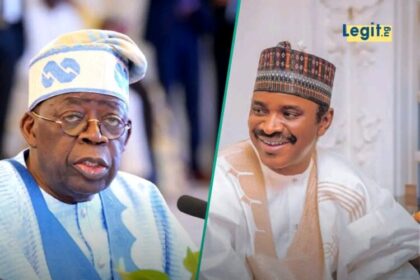

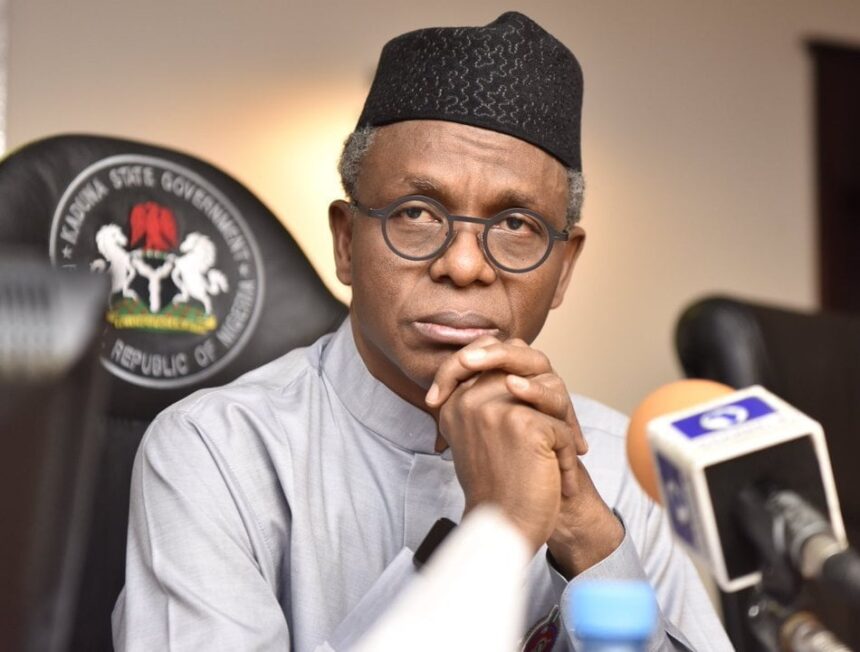
Former Kaduna State Governor, Nasir El-Rufai, spent Monday night in the custody of the Economic and Financial Crimes Commission (EFCC) following hours of interrogation over allegations linked to a multi-billion-naira corruption investigation.
Sources within the anti-graft agency confirmed that El-Rufai arrived at the commission’s headquarters in Abuja around 10 a.m. in response to an invitation and was questioned over claims contained in the 2024 Kaduna State House of Assembly report that accused his administration of financial mismanagement, abuse of office and irregular loan utilisation.
A senior EFCC official said investigators had been working on the case for nearly a year before inviting the former governor, adding that suspects are typically questioned only after preliminary findings reach an advanced stage.
The agency’s spokesman, Dele Oyewale, confirmed that El-Rufai honoured the invitation but declined to provide details on the interrogation or the next steps in the probe. As of late Monday, sources indicated that he remained in custody.
Assembly report at centre of probe
The EFCC investigation stems from a legislative report presented by an ad hoc committee of the Kaduna State House of Assembly which reviewed finances, loans and contract awards executed between 2015 and 2023.
The committee alleged that several loans secured during El-Rufai’s tenure were not applied to their stated purposes and claimed that about N423bn was siphoned, leaving the state with significant liabilities.
Lawmakers recommended the prosecution of the former governor and key officials of his administration for alleged contract irregularities, money laundering and reckless borrowing.
Beyond the headline allegation, the report also referenced disputed payments exceeding N155m, the alleged diversion of N1.37bn meant for a light rail project and the purported laundering of N64.8m by senior aides.
El-Rufai has repeatedly denied wrongdoing, describing the probe as politically motivated and insisting that all loans were lawfully appropriated for infrastructure, education, healthcare and security initiatives.
While the EFCC interrogation focused on financial issues, the Federal Government filed separate criminal charges against El-Rufai at the Federal High Court in Abuja, accusing him of unlawfully intercepting communications linked to the National Security Adviser, Nuhu Ribadu.
The three-count charge, filed under provisions of the Cybercrimes (Prohibition, Prevention, etc.) Amendment Act and the Nigerian Communications Act, alleges that El-Rufai admitted during a February 13 television interview that he and associates listened to calls connected to the NSA.
Prosecutors claim the alleged actions constituted unlawful interception and failure to report a cybercrime offence, acts they said could threaten national security. No date has been fixed for his arraignment.
The charges followed remarks the former governor made during an Arise TV programme, where he claimed he became aware of a purported plan to arrest him through information obtained from intercepted communications. The statement drew swift reactions from presidential aides, who accused him of attempting to create political tension and deflect attention from corruption allegations.
DSS reopens Dadiyata investigation
In a separate development, security sources disclosed that the Department of State Services (DSS) has reopened investigations into the 2019 disappearance of Abubakar Idris, also known as Dadiyata, a government critic who went missing in Kaduna nearly seven years ago.
According to the sources, El-Rufai’s passport was recently seized at the Nnamdi Azikiwe International Airport, Abuja, as part of ongoing investigations. Officials said the probe may extend to his sons over social media posts made around the time of Dadiyata’s disappearance.
El-Rufai has consistently denied any connection to the missing lecturer, maintaining that he neither knew him personally nor had any motive to target him.