


● Confusion in Bloomberg’s and Forbes’ ratings of Nigeria’s moneybags
● Conflicting billionaire rankings cast an awkward spotlight on magnates’ wealth narratives
● Methodology, opacity and market visibility fuel a prestige paradox among Africa’s deeppockets
Digits have begun to argue where legacies remain serene. A quiet numerical storm brews at the summit of African wealth, where the fortunes of Abdulsamad Rabiu and Mike Adenuga are being measured, weighed and re-measured by the world’s most authoritative wealth chroniclers, yet never quite in agreement. One ledger crowns Rabiu with a commanding financial ascent; another tempers the climb with cautious arithmetic. The result is a baffling spectacle of conflicting figures, shifting ranks and prestige ambiguity authored by Bloomberg’s real-time algorithms and Forbes’ conservative estimations, both revered, both influential, both curiously discordant.
Bloomberg’s billionaire index projects Rabiu firmly above Adenuga within Africa’s elite wealth hierarchy, propelled by the transparent surge of listed industrial assets and market-driven valuations. Forbes-aligned estimates, however, compress the gap with a more guarded calculus, assigning fluctuating bands that occasionally narrow the perceived distance between both titans.
Between these competing numerical narratives lies an awkward contradiction: two globally trusted publications, two different verdicts on the same fortunes, and a public ranking drama that neither man sought, yet now subtly reframes their reputational aura and symbolic standing within Nigeria’s pantheon of economic power.
There is no gainsaying that a peculiar drama now plays out in the rarefied arena of global wealth indices, where numbers and reputations are distilled into digits that shimmer on dashboards in New York and London. Somewhere between algorithmic precision and editorial caution, Rabiu and Adenuga — arguably two of Nigeria’s most formidable industrial titans — have become reluctant protagonists in a quiet controversy authored by the world’s most authoritative wealth chroniclers. The Bloomberg Billionaires Index and Forbes’ rich lists, each revered as an oracle of global affluence, now tell parallel yet dissonant stories about the same men, their fortunes, and their standing among Africa’s moneyed aristocracy.
The contradiction carries the subtle embarrassment of a public ledger that cannot agree on its own arithmetic. Recent global wealth tallies place Rabiu among Africa’s foremost billionaires, buoyed by a surge linked to the performance of his publicly listed industrial assets. Bloomberg’s modelling situates his fortune comfortably above the $10 billion mark, assigning him a place within the continent’s elite financial tier and positioning him clearly ahead of Adenuga within its ranking architecture. Forbes-aligned references, however, oscillate within a broader band, occasionally compressing his valuation toward the $8.5 billion range while stretching toward $12 billion in more expansive cycles. That numerical elasticity alone creates a spread wide enough to provoke analytical unease among observers of global wealth data.
For Adenuga, the divergence is subtler yet equally telling. Forbes’ traditional framework situates his net worth within the $6.7 billion to $7.1 billion corridor, preserving his longstanding identity as one of Nigeria’s foremost business magnates and historically the country’s second richest figure after Aliko Dangote. Bloomberg’s index, operating within a different epistemic logic, frequently compresses his valuation into the lower $6 billion spectrum, placing him below Rabiu with greater decisiveness. Thus, the same fortune appears heavier in one ledger and lighter in another, depending on the lens through which wealth is weighed.
Such discrepancies do not stem from frivolous miscalculation. They emerge from the structural philosophies embedded within each institution’s approach to measuring wealth. Bloomberg’s index breathes with the pulse of the market. Its calculations refresh daily, absorbing fluctuations in share prices, market capitalisation and publicly traded equity exposures. Rabiu’s empire, anchored significantly in listed industrial giants such as BUA Cement and BUA Foods, thrives within this framework of transparency and liquidity. Each bullish market movement amplifies his visible net worth, each surge in profit after tax — including the reported 91 per cent rise posted by BUA Foods — translates almost immediately into an upward reconciliation of his global standing.

Forbes, by contrast, walks with a slower, more deliberate gait. Its methodology privileges conservatism, applying discounts to illiquid holdings, cross-holdings and privately held conglomerates whose valuations resist easy public scrutiny. This cautious calculus inevitably affects Adenuga more profoundly. His vast empire, dominated by privately held telecom and oil interests, exists within a valuation ecosystem less amenable to daily market modelling. Globacom, the crown jewel of his telecom legacy, operates outside the transparent valuation cycles that animate publicly traded equities. Conoil, similarly, sits within layers of opacity that defy simplistic quantification. Wealth thus becomes a matter of interpretive estimation rather than real-time numerical certainty.
The result is a paradox that reveals the deeper politics of data visibility in modern capitalism. Markets reward transparency. Indices reward liquidity. Narratives reward measurable growth. Rabiu’s industrial holdings, traded and scrutinised in public markets, generate a steady stream of quantifiable metrics. Profit surges, revenue expansions and valuation upticks offer Bloomberg’s algorithms a constant supply of measurable signals. Adenuga’s fortune, rooted in private enterprise, resists such instantaneous visibility. His wealth flows through channels that evade daily estimation, creating a valuation silence that indices often interpret conservatively.
Yet the embarrassment lies not in the methodological divergence alone but in the public spectacle of contradiction between two globally trusted arbiters of wealth. For observers unfamiliar with the nuances of financial modelling, the disparity may appear as an analytical inconsistency bordering on reputational confusion. One publication crowns Rabiu with an emphatic numerical lead; another presents a narrower gulf, occasionally preserving Adenuga’s prestige proximity. The optics of such divergence can inadvertently distort public perception, reshaping narratives around entrepreneurial dominance and national economic symbolism.
Reputation, within the ecology of global business, functions as both currency and mythology. Rabiu’s meteoric ascent within recent indices signals the rise of industrial manufacturing as a central engine of Nigerian wealth creation. Cement production expansions, food processing capacity growth and strategic partnerships with international manufacturing firms project an image of disciplined industrial consolidation. Market analysts interpret these moves as signals of long-term scalability, further strengthening investor confidence and boosting equity valuations that feed directly into wealth indices.
Adenuga’s narrative unfolds along a different axis. His legacy rests upon the telecommunications revolution that reshaped Nigeria’s digital landscape and the oil ventures that anchored his empire within energy markets. These assets possess enormous intrinsic value yet operate within informational ecosystems less transparent to global valuation algorithms. Legacy wealth, built across decades of infrastructural dominance, becomes difficult to compress into the neat arithmetic preferred by modern indices. Thus, while prestige endures, numerical ranking appears fluid.
Public fascination with billionaire rankings, though often dismissed as vanity metrics, exerts a subtle influence on entrepreneurial symbolism. Africa’s wealth hierarchy functions as a narrative map of economic power. When indices diverge, the map becomes distorted. Rabiu’s elevated positioning in Bloomberg’s index reinforces a narrative of industrial ascendancy. Forbes’ more cautious valuation range tempers that narrative, presenting his rise as significant yet measured. Adenuga’s relative positioning oscillates accordingly, not due to diminished enterprise strength but because of valuation opacity that masks the full breadth of his private holdings.
Within elite financial circles, the contradiction invites deeper scrutiny of how wealth itself is conceptualised. Net worth, after all, exists as a construct shaped by assumptions, projections and data availability. Publicly listed assets produce a transparent trail of valuation breadcrumbs. Private conglomerates operate within guarded financial architectures where estimation replaces direct measurement. The difference does not necessarily indicate error; rather, it reveals the limits of global wealth accounting systems when confronted with hybrid business empires that straddle public and private domains.
The implications for both men’s public standing remain nuanced. Rabiu’s rising valuation trajectory enhances his image as a disciplined industrial strategist whose enterprises align with modern market transparency. Investors, analysts and global observers perceive his growth through tangible financial metrics. The symbolism of crossing the $10 billion threshold, as suggested by Bloomberg’s modelling, reinforces his stature within Africa’s contemporary capitalist renaissance.
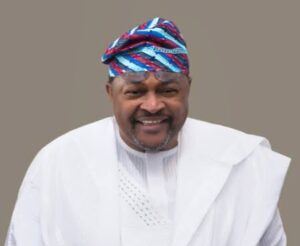
For Adenuga, the narrative shifts toward enduring legacy rather than fluctuating rankings. His empire’s opacity shields it from daily valuation swings, preserving a mystique that defies algorithmic reduction. Yet the compression of his estimated wealth in transparency-heavy indices may inadvertently project an image of relative stagnation, even when underlying assets remain robust. Such optical distortion underscores how methodology can shape perception more powerfully than reality.
Ironically, both men appear largely indifferent to the theatricality of billionaire rankings. Their public personas project an ethos of industrious focus rather than performative affluence. Rabiu’s expansion into food processing, cement production and large-scale manufacturing reveals a strategic vision oriented toward national industrialisation rather than global applause. Adenuga’s famously private disposition further distances him from the spectacle of wealth rankings, reinforcing his identity as a quiet titan whose influence transcends numerical hierarchies.
Still, the contradiction between Bloomberg and Forbes introduces an unintended reputational tension. Corporate historians, investors and policy analysts rely upon these indices as reference points for understanding economic influence. When the reference points diverge, analytical clarity suffers. Questions emerge regarding comparative dominance, strategic trajectory and continental ranking legitimacy. A billionaire positioned fourth in one index and closer to fifth or sixth in another becomes a subject of interpretive ambiguity rather than definitive classification.
Nigeria’s broader economic narrative also intersects with this valuation drama. The surge in wealth among its industrial magnates signals resilience within a challenging macroeconomic environment. Manufacturing expansion, industrial capacity growth and strategic partnerships with global engineering firms reflect a private sector determined to anchor national economic progress. Rabiu’s wealth surge, linked directly to the bullish run of BUA Foods and cement operations, exemplifies this industrial momentum. Such growth strengthens Nigeria’s representation within Africa’s billionaire cohort, whose combined fortunes have reportedly surpassed symbolic thresholds in recent years.
Yet the reliance on global indices to narrate African wealth introduces another layer of epistemological tension. Western financial publications, armed with sophisticated modelling tools, interpret African business empires through frameworks developed in vastly different economic contexts. Private conglomerates, informal cross-holdings and region-specific corporate structures often resist precise valuation within these frameworks. Discrepancies thus arise, not from incompetence, but from structural mismatches between global financial methodologies and African corporate realities.
The symbolic rivalry between Rabiu and Adenuga, therefore, exists largely as a construct of external quantification rather than internal competition. Both men operate within distinct industrial ecosystems, guided by strategic visions shaped by decades of entrepreneurial discipline. Their empires intersect within Nigeria’s economic landscape yet diverge in operational focus and capital structure. Wealth rankings, however, flatten these complexities into numerical hierarchies that invite simplistic comparisons.
Bloomberg’s daily calculation tends to amplify Rabiu’s momentum, particularly during periods of strong equity performance. Forbes’ periodic reassessments, grounded in conservative valuation logic, create a stabilising counter-narrative that tempers rapid fluctuations. The resulting discrepancy becomes an intellectual reminder that wealth estimation functions as an evolving science rather than a fixed truth. Numbers, though authoritative in appearance, remain susceptible to methodological interpretation.
For the global audience observing Africa’s billionaire landscape, the contradiction may appear as an analytical oversight. For seasoned financial observers, it reveals a deeper story about transparency, liquidity and the evolving architecture of modern capitalism. Rabiu’s rise within transparency-driven indices reflects a broader structural shift favouring publicly listed industrial wealth. Adenuga’s relative compression underscores the enduring challenge of valuing private telecom and energy empires within data-centric frameworks.
Ultimately, the spectacle of conflicting rankings offers a poetic metaphor for wealth itself — vast, complex and resistant to definitive measurement. Fortune, particularly within diversified conglomerates, cannot be reduced to a single numerical line without sacrificing nuance. Rabiu’s industrial ascendancy and Adenuga’s legacy empire coexist within Nigeria’s economic firmament, each illuminating different pathways to billionaire stature.
Embarrassment, if any, belongs less to the men and more to the arithmetic that seeks to define them with absolute precision. Their reputations remain anchored in enterprise, innovation and national impact rather than fluctuating digits on a global index. Investors respect their strategic depth. Entrepreneurs draw inspiration from their trajectories. Policymakers interpret their industrial contributions as pillars of economic resilience.
Thus, the question of who stands richer in 2026 dissolves into a broader reflection on how wealth is seen, calculated and narrated. Bloomberg’s index proclaims Rabiu’s decisive lead within a transparency-driven framework. Forbes’ calibrated estimates preserve a narrower gap shaped by conservative valuation principles. Between both lies a corridor of interpretive uncertainty that reveals the limitations of numerical absolutism in capturing the true scale of diversified wealth.
Africa’s billionaire narrative continues to evolve alongside its industrial renaissance. Figures rise and fall within indices, yet the deeper story resides in the enterprises they build, the industries they transform and the economies they fortify. Rabiu’s manufacturing surge and Adenuga’s telecom legacy represent complementary chapters within Nigeria’s capitalist chronicle. Their fortunes, though measured differently, converge in symbolic significance as embodiments of indigenous enterprise on the global stage.
Numbers may contradict. Methodologies may diverge. Rankings may oscillate. Yet the stature of both titans endures beyond the arithmetic of global wealth tables, resting instead upon decades of disciplined entrepreneurship and enduring economic impact. Within that enduring reality, the confusion of indices becomes a footnote.

