

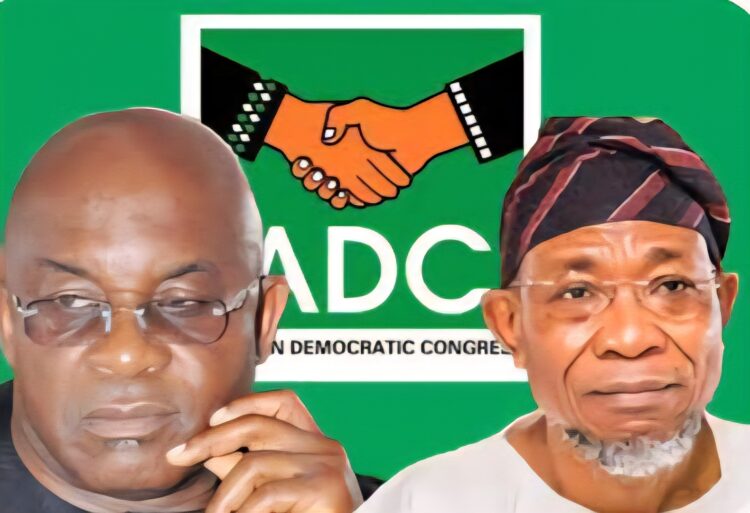
The African Democratic Congress (ADC) has dismissed reports alleging that its National Chairman, David Mark, and National Secretary, Rauf Aregbesola, have stepped down from their positions following a decision by the Independent National Electoral Commission (INEC).
The clarification was made by the party’s spokesperson, Bolaji Abdullahi, in a statement shared via his official X handle on Sunday, April 5, 2026. His response came amid growing confusion triggered by viral online reports suggesting that INEC had withdrawn recognition of the two party leaders.
According to the reports, Independent National Electoral Commission had allegedly taken steps to no longer recognize David Mark and Rauf Aregbesola as the legitimate leaders of the ADC. The claim quickly circulated across social media platforms, raising concerns among party members and political observers.
However, Abdullahi firmly debunked the reports, describing them as false and misleading. He stressed that there has been no change in the leadership structure of the party and that both Mark and Aregbesola remain in their respective offices.
In his post, Abdullahi urged the public to avoid spreading unverified information and to take proactive steps in curbing misinformation. “Please disregard, flag and report such content on any social media platform where you encounter it,” he wrote.
The ADC spokesperson reiterated that the party’s leadership remains intact and continues to function without disruption. He emphasized that any official changes within the party would be communicated through proper and verified channels, rather than through unconfirmed online reports.
The development highlights the increasing role of social media in shaping political narratives, as well as the challenges political parties face in managing misinformation. Analysts note that false reports about leadership changes can have significant implications, especially in a politically sensitive environment where party structure and recognition play crucial roles.
The ADC has been gaining attention in recent times as it seeks to strengthen its position within Nigeria’s political landscape. As a result, developments concerning its leadership often attract widespread interest and scrutiny.

