
● Armani, Burj Al Arab closures signal strain beneath city’s glittering facade
● War tensions ripple through elite travel, thinning ranks of high-spending Nigerian visitors
Glass towers still catch the Arabian sun. Gold still glitters along Sheikh Zayed Road. Yet something vital has slipped out of the air, a hush where laughter once rang, and a pause where champagne once bubbled. Dubai, long enthroned as the pleasure capital of the ambitious elite, now manifests a strange quiet in its most exclusive sanctuaries.
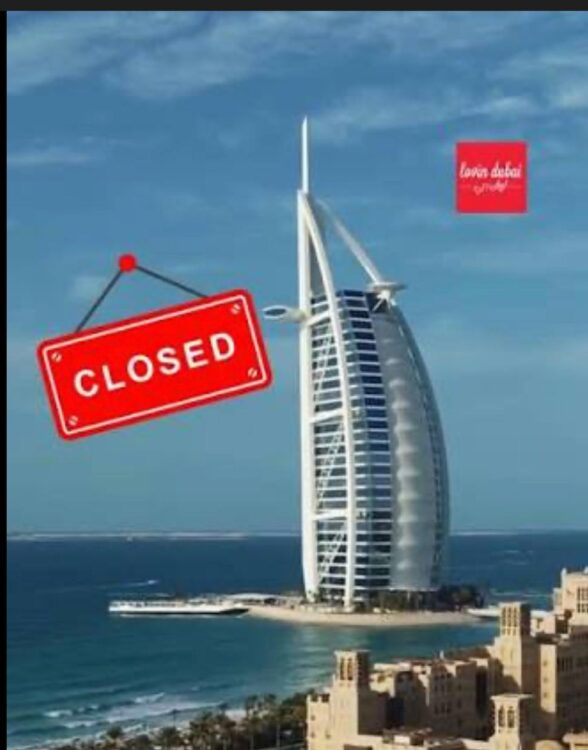
The news travelled first as polite announcements, wrapped in the syntax of reinvention: renovations. Yet beneath the polished phrasing lies a harsher rhythm, the distant thunder of conflict, echoing across borders, unsettling fortunes, thinning crowds, and dimming the lights inside two of the most coveted addresses in global luxury: Armani Hotel Dubai and Burj Al Arab.
Dubai has always been a city of entrances: jets slicing through the desert sky, convoys gliding beneath neon arches, and wealth announcing itself in spectacle. Every arrival carried a promise: escape, indulgence, and anonymity wrapped in grandeur.
Nigerian elites, among the most visible patrons of this glittering theatre, embraced the city with fervour. Bankers, oil magnates, politicians, entertainers, they came seeking a stage that understood extravagance without apology. Weekends blurred into festivals of spending. Suites became sanctuaries and restaurants transformed into arenas of soft power.
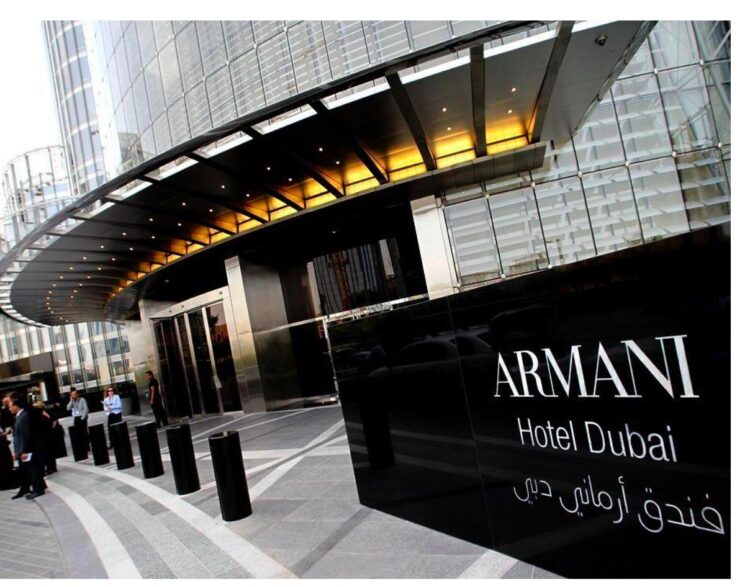
Within this pageantry of wealth, two addresses held near-mythic status. Armani Hotel Dubai, nested within the world’s tallest tower, offered an aesthetic of disciplined elegance. And the Burj Al Arab, rising like a sail against the Arabian Gulf, delivered spectacle in its purest form: gold leaf, soaring atriums, and a declaration that excess could indeed be artistic.
Together, they formed twin pillars of aspiration. To stay there signified arrival into a rarefied league. But since conflict erupted in the Middle East, markets, air routes, and the once thriving tourism sector of the region have suffered a worrisome decline. There is no gainsaying the escalating confrontation involving the United States and Israel aligned against Iran has redrawn invisible maps across the region. Airspaces tremble with uncertainty, insurance premiums climb even as travel advisories sharpen their tone.
Air travel into Dubai has grown increasingly uncertain as schedules shift under the weight of regional tensions. Airlines have adjusted routes, delayed departures, and cancelled flights with rising frequency, disrupting the steady flow of high-spending visitors who sustain the city’s luxury economy. The seamless movement that once carried guests from global capitals into Dubai’s most exclusive suites now faces interruptions that ripple across the hospitality sector. Industry operators say the uncertainty has introduced hesitation among travellers who typically plan with precision and demand predictability, prompting many to defer trips or redirect them to destinations perceived as more stable.
The impact has registered most visibly within the upper tier of the hospitality market, where occupancy relies heavily on a constant stream of affluent international guests. In recent weeks, hotel corridors that previously echoed with a mix of languages have grown noticeably quieter, while reservation systems reflect a drop in forward bookings. Concierge desks, accustomed to managing last-minute luxury arrangements, now handle a growing number of cancellations and itinerary changes. This shift has forced operators to reassess projections and recalibrate expectations for a season that once promised strong returns.
Against this backdrop, Armani Hotel Dubai has announced a comprehensive refurbishment programme, presenting the closure as part of a strategic upgrade designed to enhance its offering. Management has framed the move as a forward-looking investment that will redefine the guest experience and align the property with evolving standards of luxury hospitality. Bookings have been suspended, and the hotel’s operations paused as preparations for the overhaul proceed.
Along the coastline, Burj Al Arab has outlined plans for an extensive renovation expected to span approximately 18 months under the direction of French interior architect Tristan Auer. The project, which will unfold in phases, aims to introduce updated design elements and enhanced facilities while maintaining the hotel’s iconic identity. Official statements from operators emphasise continuity, careful planning, and a commitment to maintaining global standards, while avoiding any direct linkage between the closures and the broader geopolitical situation.
Industry insiders and frequent patrons, however, describe a more complex reality shaped by the economic and psychological effects of the ongoing conflict involving the United States and Israel against Iran. Conversations within private networks of travellers and hospitality professionals suggest that operators have adopted a cautious approach in response to declining demand, rising operational costs, and heightened risk assessments. Several sources familiar with the market say refurbishment provides a practical framework for temporarily scaling back operations while preserving brand prestige and avoiding the perception of reduced performance.
A Lagos-based financier who regularly visits Dubai and maintains close ties with hospitality executives noted that closures of this scale rarely occur without broader strategic considerations. He explained that management teams often align renovation cycles with periods of reduced demand in order to limit revenue losses while maintaining long-term positioning. According to him, the current environment has created conditions that make such timing both necessary and advantageous.
The situation gained further attention in early March when debris from an intercepted drone struck part of the exterior of Burj Al Arab. Although the damage was contained and swiftly addressed, the incident introduced a new dimension to perceptions of security within the region. Officials have stated that the renovation plans predate the event and remain unrelated, yet the occurrence has influenced conversations among travellers and industry observers who view it as a reminder of the proximity of ongoing hostilities.
Beyond the two flagship properties, the effects of the slowdown have extended across Dubai’s broader luxury hospitality landscape. Several high-end restaurants and venues within major resort complexes have temporarily suspended operations as part of what operators describe as a cycle of upgrades and concept refreshes. Establishments such as La Mar by Gastón Acurio, Dinner by Heston Blumenthal, Ling Ling, Ossiano, and Hakkasan have paused service, with management citing opportunities to enhance offerings and introduce new experiences. While some venues continue to attract steady patronage, the pattern of intermittent closures reflects a wider recalibration within the sector.
Hotels across the city have adopted similar strategies. Properties including Park Hyatt Dubai, St. Regis The Palm, and Radisson Blu Media City have either initiated renovation phases or adjusted operations to align with shifting demand. Industry analysts interpret these moves as part of a broader effort to maintain competitiveness while navigating a more challenging operating environment. The emphasis on refurbishment and innovation serves to position these properties for a stronger return once market conditions stabilise.
Nigerian travellers, who have long formed a significant segment of Dubai’s luxury clientele, have also begun to adjust their travel patterns. Travel consultants in Lagos and Abuja report a decline in bookings for high-end Dubai properties, alongside an increase in inquiries for alternative destinations in Europe and North Africa. The shift reflects a combination of caution, logistical challenges, and evolving preferences among affluent travellers who continue to seek premium experiences while weighing considerations of safety and convenience.
For years, Dubai has functioned as a preferred destination for Nigeria’s elite, offering a blend of accessibility, privacy, and opulence that aligns with their lifestyle. High-profile celebrations, business engagements, and leisure trips have frequently centred around landmark properties such as Armani Hotel Dubai and Burj Al Arab, reinforcing their status as symbols of global luxury. The current slowdown has introduced a noticeable gap in that pattern, even as many travellers maintain long-term loyalty to the destination.
Economic factors continue to shape the sector’s trajectory. Rising insurance premiums, supply chain disruptions, and fluctuating energy costs have increased operational expenses for hospitality providers, while currency volatility has added another layer of complexity to financial planning. These pressures, combined with softer demand, have compelled operators to adopt more flexible strategies aimed at preserving profitability and sustaining brand value.
Communication within the luxury segment remains carefully managed, with operators emphasising continuity and future growth while avoiding references to short-term challenges. Industry observers note that such messaging reflects a long-standing approach designed to protect brand perception and maintain consumer confidence. By framing closures as part of an ongoing cycle of improvement, companies seek to reinforce their commitment to excellence and ensure that their positioning remains intact.
Dubai’s history demonstrates a capacity for adaptation in the face of external shocks. The city has navigated financial downturns, regional instability, and global disruptions while continuing to expand its infrastructure and diversify its economy. Current developments present a different set of challenges, characterised by their proximity and their impact on travel behaviour, yet they also highlight the resilience that has defined the emirate’s growth.
Construction activity continues across key districts, with new projects and upgrades signalling confidence in the long-term outlook. Industry stakeholders express cautious optimism that demand will recover as conditions stabilise, supported by Dubai’s established reputation and its ability to deliver high-quality experiences. The temporary closure of flagship properties forms part of this broader cycle, allowing operators to reposition themselves for the next phase of growth.
Within the shuttered interiors of Armani Hotel Dubai, teams have begun preparatory work that will reshape its design and refine its offerings, while along the shoreline, Burj Al Arab prepares for a transformation intended to sustain its iconic status. These projects represent both a response to present conditions and an investment in future demand, reflecting a strategy that balances caution with ambition.
The current lull across segments of Dubai’s luxury hospitality market underscores the extent to which global events influence even the most insulated sectors. While the city remains physically distant from active conflict zones, the interconnected nature of travel, finance, and perception ensures that its effects resonate within its borders. Reduced footfall, altered itineraries, and shifting preferences collectively shape an environment that requires continuous adjustment.
Market analysts expect a gradual recovery once geopolitical tensions ease and travel confidence returns. Historical patterns suggest that high-net-worth individuals will resume international travel, restoring demand for premium accommodations and experiences. Dubai’s established infrastructure, combined with its proactive approach to reinvention, positions it to benefit from that resurgence.
Until then, the subdued atmosphere within some of its most prestigious venues offers a stern contrast to the vibrancy that has long defined the city. The absence of familiar rhythms—full occupancy, bustling lobbies, and high-profile gatherings—signals a period of transition rather than decline. Operators, travellers, and observers alike recognise that the foundations of the market remain intact, even as they adjust to present realities.
As renovation timelines progress and conditions evolve, attention will focus on how quickly demand returns and how effectively operators translate their investments into renewed appeal. The reopening of landmark properties such as Armani Hotel Dubai and Burj Al Arab will serve as key indicators of recovery, marking the point at which the sector transitions from adjustment to expansion.
For now, Dubai’s luxury hospitality landscape reflects a moment shaped by caution, strategy, and anticipation. The city continues to project confidence, supported by its track record and its capacity for reinvention, while navigating a complex environment influenced by forces beyond its immediate control. Industry participants remain focused on sustaining operations, preserving brand integrity, and preparing for the return of a global clientele whose expectations continue to define the standards of luxury worldwide.