

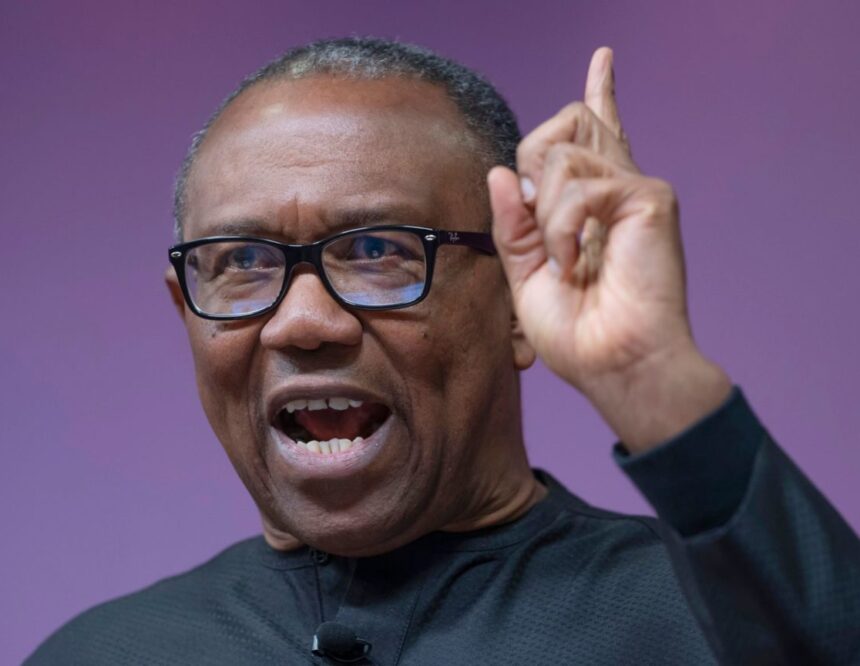
Former Labour Party presidential candidate, Peter Obi, has finally dumped the African Democratic Congress (ADC), according to multiple high-level insiders familiar with ongoing political realignments ahead of the next election cycle.
Sources close to the development revealed that “the decision has been taken” following the Supreme Court ruling on the party’s lingering leadership crisis, which has continued to cast uncertainty over its stability and legal standing.
Insiders say former Kano State governor, Rabiu Musa Kwankwaso, is “fully aligned” with Obi and “moving in the same direction,” with both camps reportedly agreeing that “staying in ADC under these conditions is a risk we’re not willing to take.”
According to sources at the centre of the negotiations, the internal situation within the ADC has been described bluntly as “a setup.” One insider explained: “The plan is simple, bring everyone in, then knock them out on technical grounds.”
Concerns over potential legal battles appear to be a major factor driving the exit. “Once this gets to the Federal High Court, it’s over. Nobody will rescue you,” a senior source warned, pointing to fears that unresolved party disputes could jeopardize future candidacies.
The crisis is further compounded by tensions involving former Vice President, Atiku Abubakar. Insiders claim his stance has “shut the door completely,” noting that “his refusal to step aside has hardened everything, there’s no path forward like this.”
Multiple sources confirmed that the withdrawal process is already underway. Obi and Kwankwaso have “stepped back deliberately,” while discussions around alternative political platforms have moved beyond preliminary stages. “Alternative platform talks are not exploratory anymore, they’re advanced,” one source disclosed.
Despite the Supreme Court’s intervention, insiders insist the ruling has done little to resolve the crisis. “The Supreme Court didn’t solve anything,” a source said. “It made the situation worse, and the legal risk is still hanging.”
Another insider emphasized the inevitability of the move: “This is not a maybe. It’s happening. The only thing left is timing.”
The development signals a major shift in Nigeria’s opposition landscape, as key political figures appear to be repositioning amid growing uncertainty within existing party structures.

