

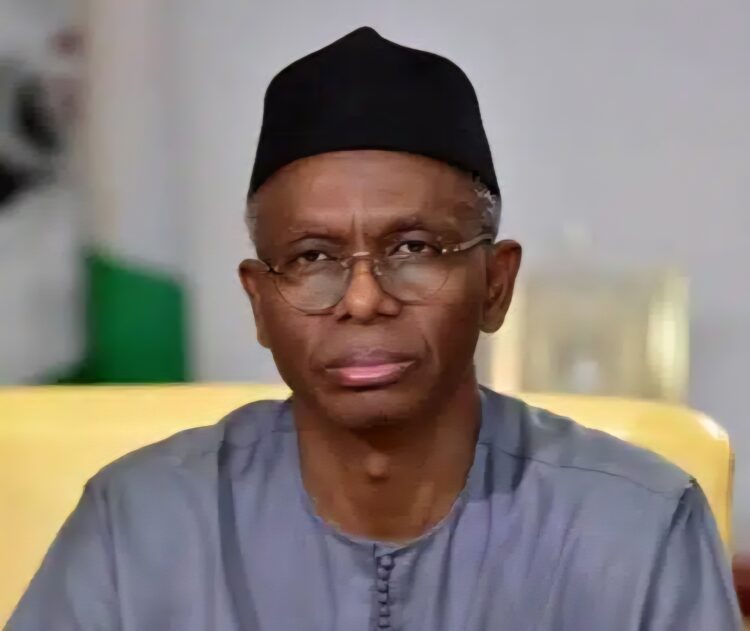
Nasir El-Rufai’s name in public office, particularly his rise from being the Minister of the Federal Capital Territory (FCT) to becoming the Kaduna State Governor were portrayed with one thing, a hard working man who dedicated himself to serving the masses, but the allegations that have trailed his last official seat have become source of worries for many admirers and threats to political ambitions the pride of Kaduna may have for 2027.
The allegations, which have become so ripe barely three years after leaving office, have forced the former governor to spend nights not inside his mansions but in the Economic and Financial Crimes Commission (EFCC), the Department of State Services (DSS) and the Independent Corrupt Practices and Other Related Offences Commission (ICPC) holding rooms, where questions are thrown at him.
The torture, as learnt, may further become severe as the agencies prepare charges to be presented before courts against him, an act that could result in being transferred to the Kuje prison, where he may spend more nights sleeping not on his palatial beds but on inferior facilities.
Aside from the DSS wire-tapping suit filed before the court against E-Rufai, the other agencies, EFCC and ICPC, were said to be completing their suit filed with different charges bordering on offenses including the allegation of N423 billion, which the Kaduna State House of Assembly claimed was mismanaged under his watch as the governor of the state between 2015 and 2023.
Other offences may include the allegation surrounding the whereabouts of an activist, Dadiyata, and journalists who went missing after criticising his administration style as governor of Kaduna State and the attacks on Christians, which the residents alleged were aided by the ex-governor’s body language, to the persecution in the state.
Although the ICPC has not responded to the alleged ransacking of his house on Aso Drive in Abuja, a former security officer disclosed that to fast-track all investigations against him formed for the commission’s actions to further retrieve evidence to aid their prosecution of the former minister.
No arraignment date has been fixed for the DSS suit and others that will be instituted against the former minister, but there are indications that he could be brought before the court on Friday by the agencies to avoid contravening the law on detention.
The source added that it was no longer safe for the agencies to continue keeping him in their custody without filing a suit and arraigning him before the court as stipulated by the law.
After the arraignment, the prosecutors could frustrate plans by El-Rufai’s counsel to secure bail through the court, a development that would result in his being remanded in Kuje prison, like other governors whom the agencies have prosecuted for offences committed while serving their various states.
A DSS official, who spoke on anonymity, stressed that he would get bail through the court, but it may come after spending nights inside the Kuje prison with other Nigerians who are seeking bail after their arraignment on allegations hanging over their heads.
The suits, according to a senior security officer, were also being aided by reports on his tenure as governor and after leaving office from the National Intelligence Agency (NIA), which does not favour him, and his recent comments signalled his plans to alleged heat-up the polity ahead of the 2027 election in the country.
Earlier, the DSS case, filed as FHC/ABJ/CR/99/2026, followed El-Rufai’s remarks during an interview on a popular television programme, claiming that the National Security Adviser (NSA), Nuhu Ribadu’s phone was wire-tapped and that he heard the NSA directing security operatives to detain him.
He alleged that the directive prompted an attempted arrest at the Nnamdi Azikiwe International Airport, Abuja, where he exchanged heated words with security personnel.
Witnesses at the port said officials briefly confiscated his international passport before escorting him out amid chants from supporters.
In response to the interview, DSS prosecutors filed cybercrime charges against El-Rufai for admitting to intercepting the NSA’s communications, failing to report others who conducted unlawful interceptions, and compromising public safety and national security by using technical systems to tap the NSA’s phone.
The alleged acts were said to violate provisions of the Cybercrimes (Prohibition, Prevention, etc.) (Amendment) Act, 2024, and the Nigerian Communications Act, 2003. No arraignment date has been fixed, and El-Rufai has not publicly responded to the charges.