

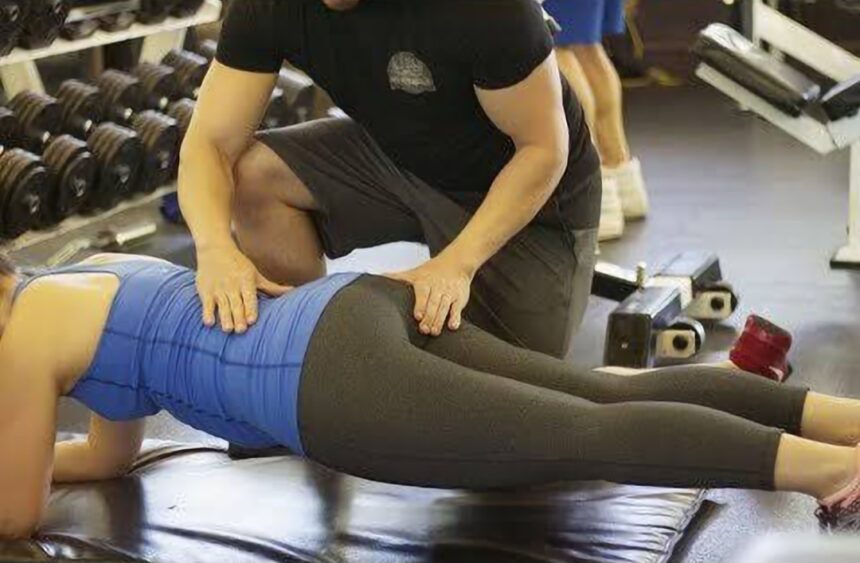
● Nigerian Men Raise Alarm As Fitness Centers Become Hotspots Of HouseWives’ Illicit Sexual Liaisons
● Married women are sweeter, better in bed – Fitness Trainers
The soundscape is familiar and reassuring: metal plates clanging, treadmills humming, music pulsing through brightly lit rooms lined with mirrors, in godly and ungodly hours. The clatter echoes across mirrored walls, in cities and estates across Nigeria,where gyms have become fixtures of modern life, promising healthier bodies, renewed confidence, and control over time and ageing. They are marketed as orderly spaces of self-discipline and wellness, where progress can be measured in repetitions, minutes, and visible change.
The narrative is simple and seductive: strength remade, confidence restored, time reversed. Yet beneath the clean lines of treadmills and the scented calm of eucalyptus towels, a darker current swirls.
A more troubling narrative has begun to surface. In conversations held far from the gym floor, husbands complain of strained relationships with their spouses and, in some cases, marriages are undone by relationships that began under the guise of fitness.
Beneath the pall of betrayed trust, wives vanish into routines that continually arouse suspicion, and children rue the sudden yet sustained absence of their mothers from home. The menace, they say, wears a vest and a whistle.
Phone numbers are exchanged, training schedules grow longer, and late-night messages follow daytime workouts. What was introduced as a commitment to health slowly reshapes domestic rhythms, leaving partners unsettled and families struggling to understand the change.
For some households, the impact has been devastating. Men describe homes emptied of intimacy, children adjusting to prolonged absences, and marriages altered by attachments formed in spaces meant for physical improvement. In their accounts, the figure at the centre of the disruption is neither abstract nor symbolic, but a familiar presence in trainers and sleeveless vests, guiding exercises while, they allege, crossing boundaries. As these stories multiply, a growing number of families are asking difficult questions about trust, vulnerability, and the unintended consequences of Nigeria’s expanding fitness culture.
Concerns about the influence of gym culture on marriages are increasingly being shared quietly in homes and openly in private messaging groups, often voiced by men who say they feel compelled to speak because similar accounts keep emerging. What many describe is a pattern that appears widespread rather than isolated, built from repeated experiences that follow a familiar course.
Kunle Adebayo, a civil engineer who lives on the outskirts of Lagos, says his marriage unraveled gradually after his wife began attending a neighbourhood gym. He recalls that it started with encouragement from her trainer and later progressed to a personalised training schedule that kept her away from home for longer periods. According to him, explanations for her absences became inconsistent, and the sense of shared routine that had anchored their relationship weakened over time. Adebayo insists that the breakdown of his marriage was not caused by financial pressure or domestic conflict but by what he describes as inappropriate intimacy fostered within the gym environment.
Critics of the trend argue that gyms often become spaces where personal insecurities are exposed and exploited. Many clients arrive with concerns about appearance, ageing, or post-pregnancy changes, making them receptive to reassurance and affirmation. Trainers, whose work requires close interaction and regular communication, often become confidants as well as instructors. Over time, observers say, this proximity can erode professional boundaries without drawing immediate attention.
Musa Lawal, a banker who says he worries about the direction his own marriage could take, explains that trust plays a central role in this process. He notes that clients depend on trainers not only for guidance but also for motivation, which can easily shift into emotional closeness. According to him, once that closeness is established, conversations often move beyond fitness, creating openings that neither party may have anticipated at the outset.
Several high-profile incidents have added urgency to these concerns. In Uyo, a gym instructor was arrested after being linked to two pregnancies involving different women. In Magodo, a dispute involving two married women who were reportedly involved with the same instructor escalated into a public confrontation. In another case recounted by multiple sources, a man said his wife left their marriage and relocated with their three children after forming a relationship with her trainer. These stories circulate widely, often shared with specific names and locations, which lends them credibility and reinforces the perception that the problem is growing.
Some husbands describe living in a state of heightened alert. Sola Adekunle, an IT consultant, says he now drives his wife to and from the gym as a precaution rather than a gesture of control. He explains that his concern is shaped by subtle changes he has noticed in conversations, humour, and daily habits. For him, the challenge lies in determining whether vigilance strengthens a relationship or gradually undermines trust. Emeka Nwoye, a trader whose marriage survived an affair that began at a gym, believes such spaces can test the stability of relationships by redirecting emotional focus. He argues that when attention shifts away from the home for extended periods, emotional bonds can weaken.
Lekki, one of Lagos’s most affluent districts, is frequently cited as an example of how wealth and lifestyle intersect with this issue. The area hosts numerous high-end fitness centres that attract professionals and social media influencers. Regular gym users describe an environment where exercise is often secondary to social interaction, photography, and networking. Phones are frequently in use, and online platforms extend these interactions beyond the gym itself, making it easier for relationships to continue privately.
Religious leaders have also weighed in on the trend. Pastor Bolaji Idowu of Harvesters International Christian Center has spoken publicly about discussions with gym instructors who say they are often asked about the financial status of male clients. According to him, such inquiries suggest that some gym visits are motivated by factors unrelated to health or fitness. He has argued that these dynamics reflect broader social pressures around wealth, status, and desire rather than isolated moral lapses.
Despite the growing criticism, observers caution against portraying trainers as the sole culprits. Many gym instructors work long hours for modest pay and operate within an industry that lacks clear professional standards. While their role places them in positions of influence, they are also vulnerable to accusations and stereotypes. One instructor, who requested anonymity, said that while some clients actively pursue personal relationships, others maintain strict professional boundaries. He added that suspicion often extends to all trainers, regardless of conduct.
Several gym instructors interviewed for this report offered blunt and unapologetic accounts of why married women have become a significant part of what they described as an unspoken culture within some fitness centres. Speaking candidly, many of them framed these relationships as both commonplace and, in some cases, economically necessary, insisting that they were responding to demand rather than creating it.
A personal trainer at a mid-range gym in Lagos, who asked not to be named because of the sensitivity of the issue, said married women were often more deliberate and confident in their approach. According to him, they tended to know what they wanted and were less likely to draw attention to themselves. “Most of the advances come from them,” he said. “They are clear-minded, they are discreet, and they don’t create drama. That makes things easier.”
Another instructor, who works at a high-end fitness centre in Lekki, echoed the sentiment and rejected the suggestion that trainers routinely prey on vulnerable clients. He argued that many married women who attend gyms are financially independent and emotionally assertive. “They are not confused people,” he said. “They have homes, children, and businesses. When they approach you, it is intentional. They value privacy, and they respect boundaries better than younger clients.”
Several trainers described these relationships as transactional, even when emotions were involved. Some said married women were more likely to offer financial support, gifts, or professional referrals, especially in an industry where instructors often work long hours for irregular pay. “This job does not come with job security,” said a trainer who has worked in three gyms across Lagos and Abuja. “When someone helps you pay rent or supports your hustle, you understand why some people see this as survival, not romance.”
Others spoke of competition and peer pressure within the profession. According to them, stories of instructors receiving cars, business capital, or international trips from married clients circulate widely within gym networks. These accounts, they said, create an environment where such relationships are viewed as markers of success rather than ethical breaches. “Nobody trains you on boundaries,” one instructor said. “You learn from what you see others doing.”
Some instructors went further, describing their involvement with married women as sport rather than necessity. A fitness coach in his early thirties said the appeal lay in maturity and discretion. “They don’t demand constant attention,” he said. “They understand time. They don’t post you online. That makes the relationship easier to manage.” He added that these encounters were often short-lived and rarely disrupted his work routine.
Not all instructors, however, were comfortable with the trend. A few acknowledged that the normalisation of such relationships had blurred professional lines and exposed trainers to reputational risk. One said accusations could arise even when no relationship existed, simply because of proximity and suspicion. “Once people assume this is what trainers do, it affects everyone,” he said.
Industry observers note that the absence of clear professional standards has allowed personal discretion to shape conduct. Unlike regulated professions, personal training operates largely without formal oversight, leaving ethical decisions to individuals. In that vacuum, some instructors said, economic pressure and opportunity often dictate behaviour.
While the instructors interviewed defended their choices, they also acknowledged the consequences. Several admitted that marriages had collapsed after prolonged relationships that began in gyms. Others said they had ended such arrangements when they became complicated or publicly visible. Still, few expressed remorse. As one trainer put it, “People make choices for their own reasons. We just happen to be part of the environment where those choices play out.”
Their accounts add another layer to the debate around gym culture and marriage, shifting focus from suspicion and fear to the realities of an industry shaped by intimacy, weak regulation, and uneven power dynamics. As fitness centres continue to expand across Nigeria’s cities, the voices of those working within them suggest that the issue is less about individual morality and more about the structures that allow personal relationships to flourish unchecked in professional spaces.
Men who have experienced marital breakdown linked to gym relationships often speak without bitterness, focusing instead on what they have lost. Ayo Ogun, a logistics manager whose marriage ended after prolonged counselling, says the gym became a constant presence that prevented reconciliation. He believes the issue is frequently misunderstood as an attempt to restrict women’s independence, when, in his view, it is about protecting shared commitments.
At the same time, many women continue to describe gyms as spaces of genuine personal improvement. Gladys Princewill, a biomedical scientist, says regular exercise helped restore her confidence and mental well-being. She credits her fitness routine with improving her work performance and strengthening her marriage by helping her feel more secure in herself. Her experience highlights the diversity of motivations and outcomes associated with gym culture.
Calls for regulation have grown louder as these conversations continue. Stakeholders have suggested clearer ethical guidelines, better supervision, and professional training that emphasises boundaries alongside technical skills. Some industry veterans argue that professionalism in fitness should be treated as a core competency rather than an optional standard.
In response, some husbands have adopted practical measures, including setting up home gyms or training alongside their spouses. Ibrahim Bello, a school administrator, says exercising together has reduced suspicion and encouraged shared goals. He believes such approaches work best when framed as cooperation rather than restriction.
While the language used to describe the situation can sometimes oversimplify complex relationships, the concerns raised by affected families remain significant. Marriages end for many reasons, and gyms may simply accelerate existing tensions by providing new social contexts. As evening approaches in areas like Lekki, fitness centres continue to fill, reflecting the enduring appeal of wellness culture. For many families, however, these spaces have become sites of difficult negotiation, where health, trust, and personal boundaries intersect in ways that are still being understood.

