
● Liquidity squeeze cripples generation firms, raising fears of wider system collapse
● Small businesses, industrial giants grapple with rising costs and shrinking margins
● How years of unpaid obligations push electricity suppliers to the brink of shutdown
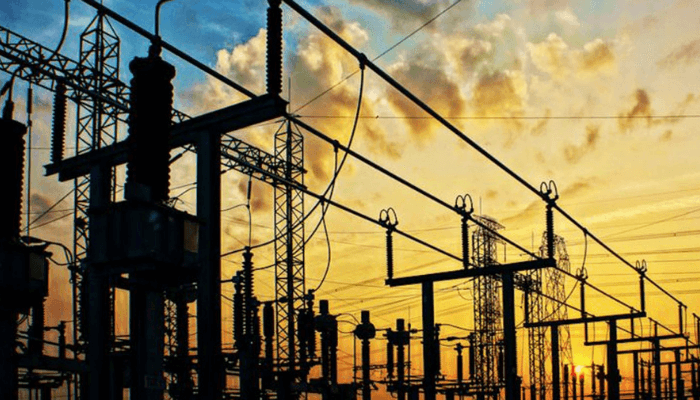
Silence has begun to gather where turbines once roared.
Across Nigeria’s power stations, steel giants that once exhaled light into cities and villages now stand in uneasy stillness, their turbines stilled by something more grievous than mechanical failure: absence of cash.
Beneath the subdued rhythm of the national grid lies a swelling burden of unpaid obligations, a N6.8 trillion debt that has accumulated across a decade and continues to expand with disquieting speed. What appears, at first glance, as a technical disruption reveals itself, on closer scrutiny, as a systemic breakdown; one that reaches far beyond the power plants into the everyday calculations of entrepreneurs, manufacturers, and investors.
The immediate manifestation of this crisis is serious. Nearly half of Nigeria’s generation plants have ceased supplying electricity at various intervals, leaving the remainder to operate within constrained limits that barely sustain national demand. Data from the system operator indicates that only 17 out of 33 plants were active at a recent snapshot, collectively generating just 3,705 megawatts.
For a country whose population exceeds 230 million, the figure underscores a persistent mismatch between capacity and need, while also revealing a more troubling pattern of regression as existing assets fall idle.
Executives within the generation segment attribute these shutdowns to an increasingly untenable financial environment in which revenue inflows fail to match operational requirements. Electricity is generated, dispatched, and consumed, yet payments for that energy often do not return through the value chain with sufficient consistency or volume. The resulting liquidity squeeze has made it difficult for generation companies to service critical inputs, particularly gas, which accounts for roughly 70 percent of Nigeria’s electricity production.
At the centre of this strained ecosystem sits the cumulative debt owed to power producers, a figure that has risen steadily since 2015 and now expands by approximately N200 billion each month. The persistence of this growth suggests that the problem is not episodic but structural, embedded in the design and execution of the electricity market. Revenue shortfalls at the distribution level cascade upstream, leaving generation companies with mounting receivables that exist largely on paper while their obligations to suppliers remain immediate and enforceable.
The imbalance has triggered a chain reaction across the sector. Generation companies, unable to recover adequate payments for the electricity they produce, struggle to settle invoices from gas suppliers and transporters. Industry estimates indicate that these firms owe roughly 60 percent of what is due to them to their own upstream partners, creating a closed loop of indebtedness in which each participant waits on another to restore liquidity. This circular dependency has eroded trust within the market, making negotiations more rigid and reducing the flexibility that might otherwise sustain operations during periods of strain.
For plant operators, the consequences extend beyond financial statements into the physical integrity of their facilities. Maintenance schedules have been disrupted as cash constraints limit the procurement of spare parts and technical services. Equipment designed for continuous operation requires regular servicing to maintain efficiency and prevent breakdowns, yet such servicing becomes increasingly difficult when funds are unavailable. Over time, deferred maintenance compounds operational risk, raising the likelihood of unplanned outages and further reducing available capacity.
The human dimension of this crisis is equally pronounced. Reports from within the industry suggest that some generation companies have struggled to meet salary obligations, while others have resorted to securing loans under increasingly stringent conditions.
Against this backdrop, government efforts to address the debt burden have taken shape, though with a pace and scale that industry stakeholders consider insufficient relative to the urgency of the crisis. Plans to raise approximately N4 trillion through domestic capital markets represent a significant commitment, yet implementation has proceeded gradually, with only a fraction of the targeted amount secured thus far. The reliance on phased bond issuances implies a timeline that stretches into the future, even as liabilities continue to accumulate in the present.
This temporal mismatch has become a focal point of concern. While the proposed funding mechanism signals recognition of the problem at the policy level, its incremental nature raises questions about its capacity to arrest the ongoing deterioration within the sector. Each passing month adds to the debt stock, effectively offsetting gains achieved through partial disbursements and prolonging the period of financial instability.
The broader implications of the crisis extend into the fabric of Nigeria’s economy, where electricity serves as both a foundational input and a determinant of competitiveness.
For small and medium-sized enterprises, the instability of electricity supply has evolved into a daily calculus of survival, where every flicker of the grid carries financial consequences. Operating costs rise in quiet increments that accumulate into suffocating burdens, while productivity bends to the erratic rhythm of power availability. Across workshops, kiosks, and modest offices, business owners increasingly abandon dependence on public supply, turning instead to diesel generators whose steady hum comes at a punishing cost.
Adebayo Lawal, a welder in Agege, describes the shift with weary precision. “If I wait for light, I will not work,” he says, wiping metal filings from his hands. “Generator is the only way, but fuel alone can swallow what I make in a day.” His experience reflects a wider pattern in which the cost differential between grid electricity and self-generation steadily erodes profit margins, narrowing the space for reinvestment and growth.
For Kemi Alade, who runs a small cold-room business in Ajah, the stakes extend beyond profit into outright loss. Power outages expose perishable goods to spoilage, forcing difficult decisions about pricing and inventory. “When light goes off for too long, you start calculating what you will lose,” she explains. “Fish, chicken, everything depends on steady power. If I run generator nonstop, fuel will finish my money. If I don’t, the goods spoil.” Her dilemma captures the fragile balance that defines many small enterprises, where neither option offers relief.
The impact cuts across sectors with relentless uniformity. Fabricators pause mid-task as machines fall silent, disrupting production timelines and straining relationships with clients. Retailers contend with dimly lit shops that discourage foot traffic, especially in densely competitive markets. Digital service providers struggle to maintain connectivity, their operations bound to power sources that fail without warning.
Chinedu Okafor, who operates a small printing and cyber services outlet in Surulere, speaks to the unpredictability that now defines his trade. “Customers come to print or scan, but if there is no light, they go somewhere else,” he says. “You cannot tell them to wait because they also have somewhere to go. So you run generator, but the cost is too much.” The cumulative effect of these interruptions, while difficult to quantify in aggregate terms, manifests sharply at the micro level, where each lost transaction and each additional expense chips away at economic resilience.
Larger industrial players face a parallel crisis, though expressed through different scales of investment and exposure. Manufacturing firms, particularly those whose processes demand consistent and intensive energy input, have been forced to integrate uncertainty into their operational frameworks. Production schedules are recalibrated to anticipate outages, and contingency systems are built into workflows that were once designed for continuity.
Many of these firms have turned to captive power generation as a defensive strategy, constructing independent energy systems to shield themselves from the volatility of the grid. This approach provides a degree of control, yet it introduces significant capital expenditure and ongoing operational costs. Diesel and gas-powered plants, while reliable, require sustained investment in fuel and maintenance, costs that ultimately feed into product pricing.
Emeka Nwosu, who manages a mid-sized plastics manufacturing firm in Ogun State, outlines the implications with measured concern. “We generate most of our power ourselves now,” he explains. “It keeps production going, but the cost is heavy. When you add energy cost to raw materials and logistics, it affects everything, including how we price our products.” His observation reflects a broader reality in which energy inefficiency cascades through the value chain, reducing competitiveness both within Nigeria and in export markets.
Collection inefficiencies at the distribution level compound the problem. When revenue from consumers fails to meet expectations, the shortfall propagates upstream, affecting generation companies and their suppliers. This dynamic creates a chain of financial strain in which each segment of the value chain depends on the performance of the others, yet lacks the mechanisms to enforce accountability effectively.
The current crisis suggests that these trade-offs have reached a point of tension where short-term accommodations undermine long-term sustainability. Industry observers increasingly argue that restoring stability will require a comprehensive approach that addresses both existing debt and future revenue flows.
The role of financial institutions emerges as a critical factor within this framework. Access to credit can provide short-term liquidity, allowing companies to navigate operational challenges. Yet lending decisions are closely tied to perceptions of risk, which in turn are influenced by the sector’s financial health and regulatory environment. As uncertainties persist, lenders may adopt more cautious positions, tightening conditions or reducing exposure altogether.
Within this environment, the resilience of Nigeria’s entrepreneurial ecosystem faces a sustained test. Small-scale operators, who form a significant portion of employment and economic activity, must continuously adapt to shifting conditions. Some invest in alternative energy solutions, others adjust operating hours, and many adopt cost-cutting measures that allow them to remain afloat.
Yet adaptation has its limits. “You can only adjust so much,” says Ngozi Eze, a hair salon owner in Enugu. “We open earlier, we close later, we manage fuel, but everything has a cost. At some point, it becomes too much.” Her words reflect the cumulative strain experienced by countless small business owners whose margins leave little room for sustained shocks.
For larger business leaders and investors, the crisis introduces strategic considerations that extend beyond day-to-day operations. Decisions about expansion, location, and sectoral focus increasingly factor in energy reliability and cost. Regions with relatively stable power supply may attract investment, while areas plagued by persistent outages risk economic stagnation.
Over time, these patterns could reshape the geographic distribution of economic activity within Nigeria, concentrating growth in pockets where infrastructure performs more reliably. Such shifts carry implications for regional development and equity, as disparities in access to power translate into disparities in opportunity.
The relationship between energy and development becomes particularly evident within this context. Reliable electricity supports critical sectors such as education, healthcare, and digital services, all of which contribute to human capital formation. Disruptions in power supply can therefore extend beyond economic metrics, affecting quality of life and long-term developmental outcomes.
As policymakers and industry stakeholders confront the current crisis, the need for coordinated action becomes increasingly apparent. Fragmented interventions may address specific aspects of the problem, yet they risk leaving underlying structural issues unresolved. A more integrated approach, encompassing financial restructuring, regulatory reform, and targeted investment, offers a pathway toward sustainable recovery.
In the near term, the trajectory of Nigeria’s power sector will depend significantly on the effectiveness of efforts to address the existing debt burden. Timely mobilization and disbursement of funds could stabilize operations and prevent further plant shutdowns. Delays or shortfalls, by contrast, risk intensifying existing pressures and accelerating the decline in available capacity.
For business owners like Adebayo, Kemi, Chinedu, and Ngozi, the outcome of these policy decisions carries immediate implications. Their enterprises operate at the intersection of national policy and daily reality, where abstract figures translate into tangible consequences.
The stakes extend beyond individual livelihoods. Electricity underpins a vast array of economic activities, from small-scale enterprises to large industrial operations. Its reliability shapes investor confidence, influences production costs, and determines the efficiency of supply chains. A sustained decline in power availability would therefore reverberate across the entire economy.
Nigeria’s power sector stands at a critical juncture defined by financial strain, operational challenges, and evolving policy responses. The path forward will require not only technical solutions but also a sustained commitment to aligning the interests of all stakeholders within a coherent regulatory framework.