

● Abuja weighs optics as scrutiny trails security contractor’s high-octane celebration
● Tolagha’s extravagant milestone fuels unease within government ranks
● How N2.5 billion Hongqi Guoli ‘Chinese Rolls Royce’ triggered scrutiny of partners’ activities
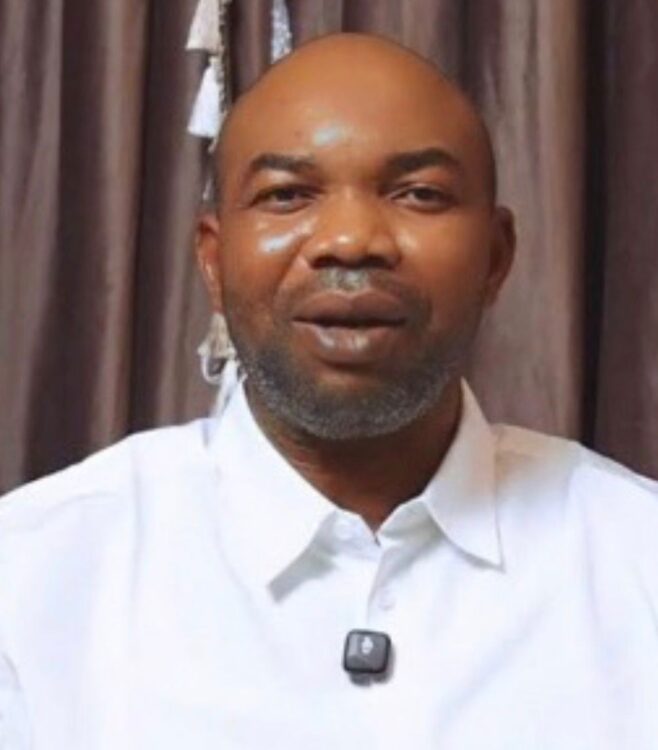
Floodlights glazed the creeks and coastlines of the Niger Delta as Matthew Tolagha marked his fiftieth birthday with drums and defiant grandeur. Fireworks brightened the venue as Champagne flowed from his jubilant fount. Afrobeats royalty seized the stage while political and corporate heavyweights added colour to the event with their presence. Somewhere beyond the music and the glamour, Abuja watched.
Rumour now surges through federal corridors that President Bola Tinubu’s government is currently weighing the possibility of revoking the pipeline surveillance contract awarded to Tolagha and his partner, Government Ekpemupolo, widely known as Tompolo, by previous administration of late President Muhammadu Buhari. A celebration designed to herald longevity may have stirred irritation in high places.
Across Nigeria’s political terrain, spectacle often carries consequence. But despite that dreadful truth, Matthew Tolagha chose to mark his golden jubilee with spectacle. And in doing this, he summoned the star wattage of Davido and Burna Boy, whose voices have conquered global charts and stadiums. Their presence transformed the birthday from a private milestone into a carnival of influence. Industry titans and regional strongmen mingled beneath chandeliers that cast soft halos over the elite.
Then came the automobile. Tolagha arrived the venue of his event in a Hongqi Guoli ultra-luxury sedan, the gleaming flagship of China’s storied automotive ambition. Marketed in Beijing at over 7.18 million yuan, the Guoli commands a Nigerian landing cost north of N2.5 billion once freight, customs, and clearance take their bite. Engineers fashioned the vehicle with a vertical waterfall grille and ceremonial round headlights that echo Chinese cosmology: heaven curves above, earth anchors below. Statecraft once rode within its steel frame. President Xi Jinping favored an armored Hongqi limousine—codenamed N701—for official duties.
Tolagha’s Guoli, often styled as the “Rolls-Royce of China,” likely stands alone on African soil. The machine glided into public view as a statement of reach, appetite, and arrival. It also amplified scrutiny.
Luxury automobiles have always functioned as emblems of arrival. The Hongqi Guoli transcends mere transport. Chinese statecraft imbues it with ceremonial gravity; the name translates loosely as “national gift.” Vertical grille bars cascade like imperial regalia. Engineers sculpted the body with an eye toward tradition and authority.

When Tolagha rolled the Guoli onto Nigerian soil, he signaled connection to global markets and elite networks. He also summoned the gaze of a government keenly aware of optics in a restless economy. Citizens who struggle with inflation and currency volatility scrutinize displays of excess with heightened sensitivity.
Tolagha’s celebration projected a triumphal narrative; success rising from creeks once marred by unrest. But while admirers celebrate that ascent, critics question its timing. The Guoli’s chrome contours flashed across social media feeds, inviting admiration and envy in equal measure. Videos of Davido’s electric stagecraft and Burna Boy’s anthems ricocheted through digital channels. But as attention thickened, people – especially in government circuits – began to ask questions.
Public discourse now probes whether Tolagha’s display undermines the moral authority of a contractor entrusted with safeguarding national assets. Perception, after all, often shapes policy as much as performance metrics, particularly in Nigeria’s oil heartland, which has always balanced precariously between grievance and opportunity. The Niger Delta bleeds crude that sustains federal coffers, while its communities often wrestle with environmental degradation and economic neglect. Pipeline surveillance contracts serve dual functions: protect infrastructure and temper restiveness.
It is noteworthy that Tolagha and Tompolo built reputations as discreet operators in the Niger Delta’s waterways. Their enterprise, Tantita Security Services Nigeria Limited, patrols pipelines that snake through mangroves and marshlands. The federal government entrusted the duo with surveillance responsibilities designed to curb oil theft, sabotage, and the hemorrhaging of national revenue. The contract carries strategic heft and fiscal allure. Observers often describe it as one of the juiciest arrangements awarded in recent years.
Tompolo’s name evokes history layered with militancy, negotiation, and eventual accommodation with the state. Years ago, he commanded influence as a former militant leader who pivoted toward dialogue and stabilization efforts. Tolagha emerged as vice chairman within the company’s architecture, reinforcing operational discipline and regional leverage. Together they carved a niche in a terrain where oil infrastructure attracts both fortune and fury.
Their success flourished under a delicate balance: effectiveness on the ground, restraint in public display, alignment with federal objectives. That equilibrium now appears strained.
Political insiders speak of irritation simmering within federal ranks. Nigeria battles economic headwinds, subsidy reforms, and public impatience. Leadership demands optics that resonate with prudence and shared sacrifice. Tolagha’s jubilant display collided with a national mood that prizes temperance.
Sources within Abuja whisper that the spectacle unsettled key decision-makers who prefer that contractors operating within sensitive sectors maintain a lower public profile. The pipeline security arrangement binds private enterprise to national security. A lavish celebration featuring global pop icons and a billion-naira luxury sedan risks projecting distance from the austerity many citizens endure.
Officials have neither confirmed nor denied a formal review. Yet chatter travels swiftly through ministries and agencies. Competitors circle. Allies scramble. The question reverberates: will the government sustain its relationship with Tantita?
Tompolo carries a complex legacy. Once a symbol of resistance, he later embraced negotiation and partnership with the state. The surveillance contract signaled a détente—a channel through which former militants channeled influence into economic stewardship. Stability in the creeks benefited federal revenue streams.
Tolagha’s birthday, however, casts Tompolo into an uncomfortable glare. Partners share fortune and fallout alike. Political watchers speculate that Abuja might interpret the celebration as an exhibition of unchecked gain derived from a government lifeline. Tompolo, long adept at navigating federal currents, now confronts a fresh test of diplomacy.
Neither man has issued public commentary on the swirling reports. Silence, in Nigeria’s high-stakes theatre, often carries strategic weight.
There is no gainsaying the pipeline surveillance contract heralds substantial revenue streams. It demands logistical muscle—boats, personnel, intelligence coordination. Tantita’s operations reportedly contributed to improved output and reduced vandalism. Government officials have publicly lauded enhanced monitoring in the Niger Delta.
Yet contracts exist within a matrix of politics and perception. If federal authorities sense reputational risk, they retain leverage to revise, renegotiate, or rescind agreements. Analysts suggest that competitors eager for a slice of the surveillance pie may exploit the current turbulence to lobby for redistribution.
Industry veterans caution that abrupt changes could unsettle fragile security gains. Oil theft networks adapt quickly to uncertainty. Thus, stability requires continuity.
Celebration as catalyst
Birthday milestones often invite reflection and gratitude. Tolagha embraced jubilation instead. He staged a festival that radiated confidence. The anniversary activities began with a novelty football match between members of the Delta State and Bayelsa State Houses of Assembly at the Shell Edjeba Field in Warri. Lawmakers from both states traded tackles in a contest that drew political associates, community leaders, and supporters from across the Niger Delta. Bayelsa’s team secured the win, yet the larger objective centered on fellowship and regional solidarity. Organisers positioned the match as a symbolic prelude to the milestone, underscoring Tolagha’s cross-border relationships within Delta and Bayelsa political circles. From the pitch, celebrations moved to the Mieka Event Centre in Effurun, where an all-white praise and worship concert gathered an influential audience that included traditional rulers, senior politicians, business leaders, and long-time associates. Delta State Governor Rt. Hon. Sheriff Oborevwori attended alongside other prominent figures from the region. Gospel artistes Mercy Chiwoh, Lillian Nneji, and IB Quake headlined the musical performances, while Tolagha arrived with his family in an S60 Pullman Maybach, receiving guests amid heightened media attention.
The Executive Director of Fenog Nigeria Limited coordinated the event’s logistics, overseeing stage design, guest management, and security arrangements to ensure seamless execution. Major media outlets transmitted the concert live, expanding its visibility beyond Delta State and drawing national attention to the celebration. Esther Tolagha, founder of the EMT Foundation, supervised key aspects of the evening’s hospitality and presentation, working closely with planners on décor and catering. Tolagha, a native of Benikrukru community in the Gbaramatu Kingdom of Delta State, has cultivated a reputation for community-focused initiatives in the Niger Delta, and several speakers referenced his philanthropic engagements during the programme. Organisers framed the concert as both a personal thanksgiving and a public acknowledgment of his business trajectory and regional influence, reinforcing his standing within political and social networks across the oil-producing corridor.
Supporters applaud his right to celebrate personal achievement without apology. They argue that entrepreneurs who generate employment and contribute to regional stability deserve moments of grandeur.
Skeptics counter that strategic discretion preserves alliances in volatile environments. They view the spectacle as a miscalculation in political theatre.
Nigeria’s elite understands that power respects subtlety. Visibility attracts admiration and antagonism alike. Tolagha’s fiftieth birthday now occupies a curious place in national conversation: a party that may recalibrate a multimillion-dollar partnership.
President Tinubu, on his part, confronts an intricate equation. His administration pursues fiscal reform and energy sector revitalization. Oil revenue remains critical to national solvency. Any decision regarding pipeline surveillance must weigh operational efficacy against political optics.
Should the government withdraw or modify the contract, officials would signal intolerance for ostentation amid economic strain. Retention of the arrangement would affirm performance metrics and regional stability over symbolism. Each path carries consequence.
Tinubu’s political instincts favor pragmatism tempered by message discipline. Observers anticipate a resolution that balances authority with continuity.
Through it all, the nation’s Delta finds itself at crossroads. Mangrove roots twist beneath brackish waters, gripping soil that sustains pipelines and livelihoods alike. Communities watch developments with wary interest. The surveillance contract funnels resources into local employment and security frameworks, thus, a sudden rupture could ripple across fragile ecosystems of trust.
Tolagha’s party shimmered with glitz and melody. Its aftershocks, however, ripple through Abuja’s power corridors, as his action stands at a junction where wealth, perception, and governance intersect.
History will judge whether the fiftieth birthday marked a harmless crescendo or a pivotal misstep. For now, the music has faded, the Guoli rests in polished silence, and speculations about the celebrant and his partner’s fate as federal security contractors rent the air.