

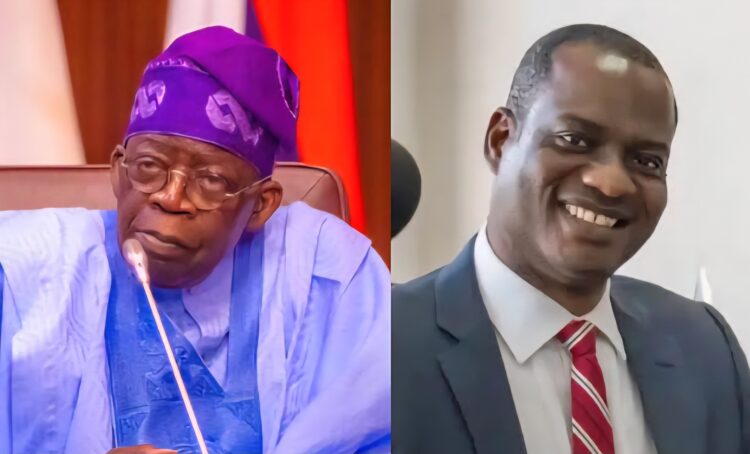
Nigeria’s Minister of State for Finance, Taiwo Oyedele, has acknowledged that errors exist in the country’s newly introduced tax reform laws, assuring that steps are being taken to correct them.
The minister made this known during a fireside chat at the 2026 annual conference of the Nigerian Bar Association Section on Legal Practice, themed “From Policy to Practice: Making Sense of Nigeria’s New Tax Reforms”, The Cable reported.
According to a statement by the Fiscal Reforms Committee, Oyedele admitted that inconsistencies emerged during the drafting and legislative stages due to procedural lapses.
The committee also noted in a social media post that the errors were caused by “manual processes and multiple stages of review” involved in producing the final laws. Oyedele urged Nigerians to await the outcome of an ongoing legislative probe into the discrepancies, adding that a proposed Finance Bill would address the identified issues.
The minister stressed the need for a more transparent legislative process, where every version of a law is accessible to the public.
He said improving openness in law-making would help prevent future inconsistencies and strengthen trust in government policies. Oyedele also explained that enforcement of the new tax laws would not be arbitrary, noting that the reforms are built on transparency, fairness, and clear policy intent.
He also urged stakeholders to focus on understanding the purpose behind tax laws, rather than relying solely on their provisions.
According to him, the reforms are designed to address long-standing issues in Nigeria’s tax system, including disparities between personal and corporate taxation that discourage business formalisation.
The minister said the new framework seeks to protect low-income earners and small businesses from excessive taxation.
He noted that many Nigerians earn less than N70,000 monthly and should not be heavily taxed, while also confirming that minimum tax requirements for loss-making businesses have been removed.
Oyedele described the previous system as one that effectively taxed capital instead of profit. Reflecting on past policy changes, Oyedele warned that inconsistent tax policies could undermine investor confidence.
He stressed that stability and predictability are essential for attracting and retaining investment in Nigeria.