

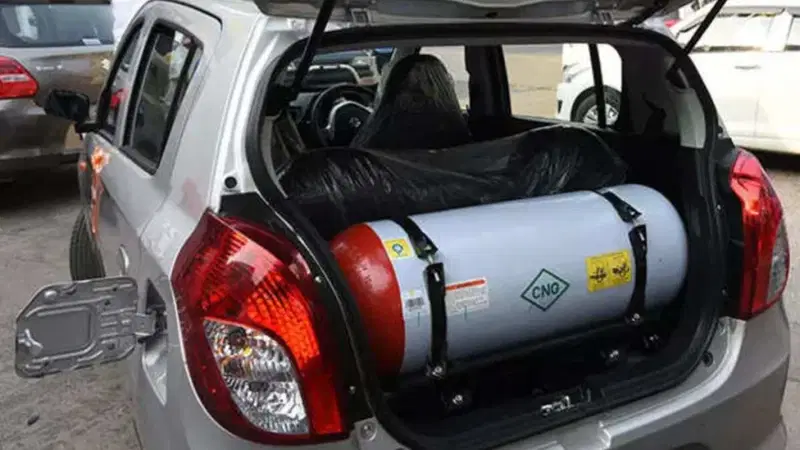
Thousands of motorists invested heavily, spending between N1m and N1.5m to retrofit their engines
A severe scarcity of Compressed Natural Gas has brought frustration, despair, and economic hardship to motorists in Abuja, forcing many to sell off their CNG cylinders and conversion kits just months after embracing the Federal Government’s push for cleaner, more affordable energy.
This is coming less than two years after the Federal Government announced a bold national strategy to promote CNG as a cleaner, cost-effective alternative to petrol amid rising fuel prices. …CONTINUE READING


At the time, the government rolled out conversion centres across the country and encouraged Nigerians to switch to CNG-powered vehicles.
Thousands of motorists invested heavily, spending between N1m and N1.5m to retrofit their engines. The government had pledged stable supply, lower operational costs, and a cleaner environment.
What was once championed as a progressive shift away from expensive, polluting petrol to cleaner and cheaper energy is fast turning into a logistical nightmare.
For many drivers, the experience is not only physically draining but also emotionally and financially devastating.
The gas station queue has morphed into a second home for many of these motorists. Some now sleep in their vehicles or on bare ground just to secure a spot in the next day’s queue.
At the Mobil Gas Station in Lugbe — one of the busiest and most critical CNG refuelling points in Nigeria’s Federal Capital Territory — long, chaotic queues have become a permanent feature.
Is the future ready for you?At Schiller, we ask, is the future ready for you? Solve real world challenges. Apply now and join the new Globals.Schiller International.
Daily, hundreds of tricycle riders, taxi drivers, and private vehicle owners converge as early as 4:00am, hoping to purchase gas. For most, that hope is crushed by evening, after hours of waiting under harsh weather conditions, often with nothing to show for it.
“I spend between six and seven hours every single day just waiting for gas that barely lasts four hours on the road. Only God can help us in this country. The suffering is too much,” said a commercial tricycle operator, Ademola Mustafa
Arguments are frequent. Fights occasionally break out.
“Monday to Saturday, I’m here. I only see my family on Sundays,” said Musa Lawal, a 38-year-old bolt driver and a father of three.
“I leave home by 3:00am and return by 11:00pm, sometimes without even buying gas. I can’t remember the last time I ate dinner with my wife and children,” he lamented.
Findings revealed that the excitement surrounding Nigeria’s energy transition policy has been replaced by murmurs of disappointment and regret.
“CNG is now like premium fuel,” said Bashirat Suleiman, another resident of Abuja, saying “Every day it’s shouting, pushing, dragging.”
The scarcity has disrupted livelihoods across the board. Commercial drivers, especially tricycle and ride-hailing operators, now face reduced work hours and income due to the long hours spent at gas stations.
“I’ve lost over N100,000 in the last one week just sitting in queues,” said Chinedu Eze, a Bolt driver. He added that “No gas, no trips. And I have bills to pay. Even my children’s school fees are hanging.”
For Ngozi Chukwuma, a real estate agent, she said, “I spent over N1m converting my car. I believed in the government’s promise. I even encouraged others to do the same. But now, I spend more time at the filling station than on the road. If I had known, I wouldn’t have bothered. It feels like we jumped from frying pan into fire.”
With mounting frustration, many motorists are now reversing their decision, removing their CNG kits and selling them off in a desperate attempt to return to petrol — which, although more expensive, is easily available.
Sources within the industry said the problem is linked to infrastructure gaps, logistics delays, and poor coordination.