

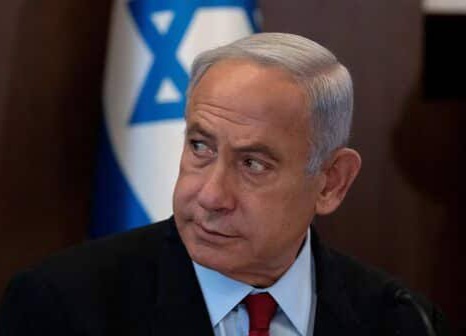
The ongoing war between Israel and Iran has taken a new dimension as a video showed the moment an Iranian missile broke through the Iron Dome defence system of the Jewish nation and hit Tel Aviv, the capital of Israel.
The Middle East’s escalation started with the assassination of Iran’s Supreme Leader, Ayatollah Ali Khamenei, during the US-Israeli strikes on Tehran, the Iranian capital, on Saturday, February 28.
In a social media post, the US president described the killing as justice for the Iranians, Americans, and “people from many countries throughout the world”
Since the killing of the Iranian leader, the Islamic Republic has continued to show its strength and launched missiles and drones at Israel and all the neighbouring Gulf countries, where the United States has military bases in the Middle East. Some of these countries include Dubai, UAE, Saudi Arabia, Kuwait and others.
One of the reasons for the attack against Iran was the need to stop the country from having nuclear weapons. The US has also claimed that the enormous missiles and drones of Iran were a threat to America.
The building of nuclear power is becoming the order of the day, as it appears that any country that has it would not be threatened by a world power.
However, against the desire of humanity, the likelihood that nuclear weapons would one day be used keeps growing, and the world is becoming more unstable.
According to Al Jazeera, the Stockholm International Peace Research Institute (SIPRI) made the broad conclusion in its Yearbook, which was published on Monday, June 16.
The publication was a compilation of SIPRI’s recent research on conflicts, military expenditure and arms transfers. SIPRI emphasised what it described as a dawning new arms race among the countries owning nuclear arms.
According to the International Campaign to Abolish Nuclear Weapons (ICAN), these countries have about 12,331 nuclear warheads.
ICAN stated that over 9,600 of these nuclear facilities are active military stockpiles, citing the report of the Federation of Atomic Scientists’ 2025 Status of the World’s Nuclear Forces.
While noting a significant decline in the 70,000 warheads belonging to the nuclear-armed countries during the Cold War, there are tendencies for them to grow in the next decade, considering the vast capability of today’s forces.
See the video of the CBC report on TikTok here: