
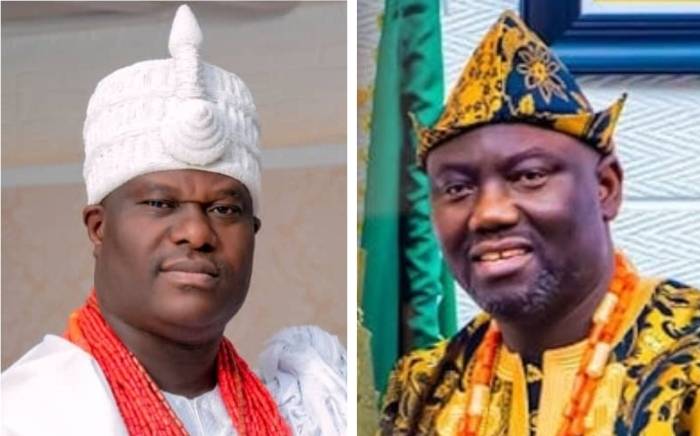
● Two Kings Reignite Supremacy Tussle With Chieftaincy Titles for Remi and Seyi Tinubu
● How presidential household became new arena of royalty scuffle
By Emmanuel Okolie
Crowns endure by memory, ritual and myth. Yet every age tests them, summoning monarchs to renegotiate their place within the restless pulse of the present. Yorubaland, custodian of one of Africa’s most elaborate systems of kingship, now watches a familiar drama acquire a fresh cadence.
Two paramount thrones, ancient in lineage and weighty in symbolism, have stepped once again into a delicate dance of prestige and power. This season, the contest unfolds through the conferment of chieftaincy titles on members of Nigeria’s First Family.
With the Ooni of Ife investing Nigeria’s First Lady, Senator Oluremi Tinubu, as Yeye Asiwaju Gbogbo Ile Oodua, and the Alaafin of Oyo conferring on President Bola Tinubu’s son, Seyi Tinubu, the title of Okanlomo of Yorubaland, the long-standing rivalry between the two stools has acquired renewed momentum.
These acts, ceremonial and stately, have drawn the ancient thrones into the orbit of contemporary power, transforming chieftaincy rites into statements of relevance, influence and subtle supremacy.
There is no gainsaying the essence of thrones and the language of symbols. Yoruba kingship speaks in signs, beads carry memory and staffs of office encode authority. Titles serve as compressed histories, bearing values, expectations and collective aspiration. When a paramount ruler confers a chieftaincy title, the act extends beyond personal honour. It becomes a message addressed to the polity, to history and to rival power centres.
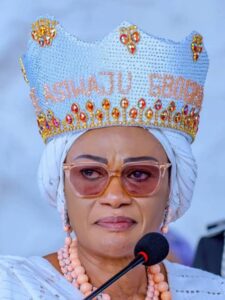
The title Yeye Asiwaju Gbogbo Ile Oodua, bestowed on Senator Oluremi Tinubu by Oba Adeyeye Enitan Ogunwusi, Ojaja II, resonates with layered significance. Translated as Mother of the Vanguard of the Entire Yoruba Nation, it evokes nurture, leadership and moral guardianship. The title carries a distinguished pedigree, once borne by the late Hannah Idowu Dideolu Awolowo, wife of Chief Obafemi Awolowo, whose name occupies a revered chapter in Yoruba and Nigerian political memory. By reviving this title for the First Lady, the Ooni tethered her public identity to a lineage of influence, sacrifice and symbolic motherhood.
Days later, Oyo responded with its own ritual eloquence. Oba Abimbola Akeem Owoade I installed Seyi Tinubu as Okanlomo of Yorubaland, a title rendered as the beloved child, one cherished by the people and entrusted with the safeguarding of communal values. Within Yoruba cosmology, the Okanlomo embodies affection, unity and promise. The conferment signals expectation, placing upon the bearer the burden of cultural fidelity and public-spirited conduct.
These gestures, distinct in tone and texture, converged upon a single axis: proximity to the presidency.
It’s all rooted in a rivalry older than the republic. The Alaafin–Ooni rivalry did not begin with this generation. It dates centuries back, shaped by empire, spirituality and competing narratives of origin. Oyo rose as a military and political colossus, projecting authority through cavalry, conquest and administrative reach. Ile-Ife, cradle of Yoruba cosmology, retained primacy as spiritual source, the city of Oduduwa, where kingship itself was believed to have descended to earth.
History never resolved the tension between sword and shrine. Instead, it preserved it, allowing each stool to draw legitimacy from a different well. Modern Nigeria inherited this unresolved dialectic, and every era finds new arenas in which it plays out. Chieftaincy titles, especially those carrying pan-Yoruba implications, have become flashpoints.
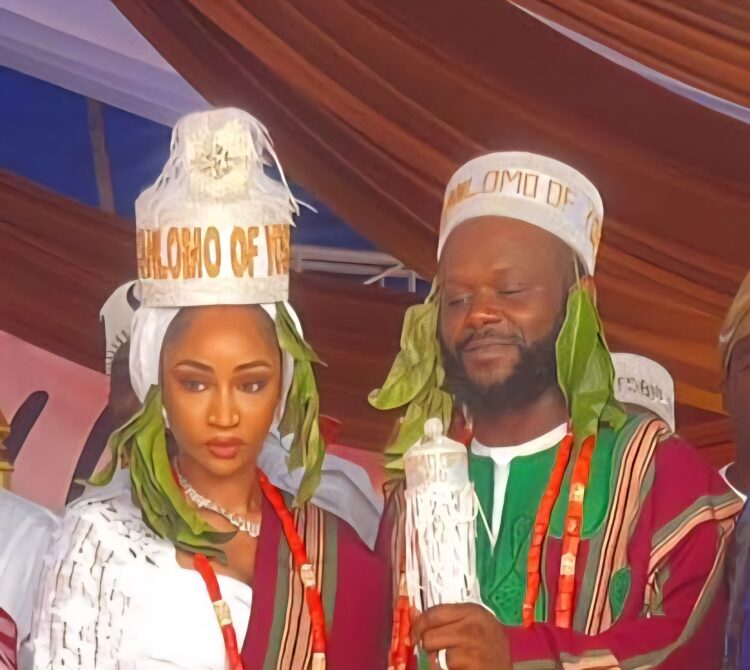
The recent memory of a public ultimatum over the conferment of the Okanlomo title on a prominent businessman still lingers in the public imagination. That episode, marked by sharp words and appeals to judicial authority, revealed how deeply questions of jurisdiction and supremacy remain embedded within the royal psyche. Against this backdrop, the decision by the Alaafin to confer Okanlomo of Yorubaland on Seyi Tinubu reads as both cultural assertion and political statement.
A new pattern emerges from these events, one difficult to ignore. Both thrones have turned their gaze toward the household of the President. The symbolism speaks loudly. In an era where elected power commands resources, attention and narrative dominance, traditional institutions face the challenge of sustaining relevance beyond ritual occasions.
By honouring the First Lady, the Ooni aligned the spiritual capital of Ife with the moral and humanitarian visibility associated with her public role. Senator Tinubu’s extensive engagement in social causes, women’s empowerment and national outreach provided fertile ground for such recognition. The title amplifies her stature within Yoruba space, framing her as maternal sentinel of collective values.
Oyo’s response followed swiftly, investing the President’s son with a title whose emotional resonance rests on affection and collective embrace. Seyi Tinubu’s profile as a lawyer, entrepreneur and political mobiliser positioned him as a bridge between generational aspiration and established power. The Alaafin’s conferment draws him symbolically into the Yoruba aristocratic fold, binding future influence to ancient sanction.
Critics describe this pattern as courtship. Monarchs, they argue, have developed an eager affection for presidential proximity, seeking reflected relevance through association with state power. The palace, once insulated by distance and mystery, now appears willing to walk closer to the corridors of Abuja.
Public reaction has been swift and layered. Royal historians, cultural scholars and political pundits have found humour in the spectacle. Laughter, in this context, however, masks discomfort. Paramount rulers, guardians of tradition and restraint, appear caught in a scramble for modern relevance and the image jars against the ideal of aloof majesty cultivated across centuries.
Some critics find the development unbecoming. They argue that Yoruba kingship thrives on moral authority anchored in distance from transient politics. Titles conferred upon the immediate family of a sitting president risk entangling sacred institutions with partisan perception. Reverence, once diluted, proves difficult to restore.
Others frame the episode as theatre, a high-stakes performance where ancient crowns gesture toward contemporary influence, each seeking to outshine the other through symbolic generosity. Within this reading, the rivalry appears less about the recipients and more about the monarchs themselves, each asserting continued centrality within Yoruba consciousness.
Apologists counter these critiques with historical breadth. Across civilizations, they remind observers, royalty has honoured illustrious citizens. British monarchs knight politicians, artists and benefactors. European nobility confers peerages upon figures whose service shapes national life. Titles, within this tradition, recognise contribution and reinforce social cohesion.
Within Yoruba culture, chieftaincy titles have long functioned as instruments of integration. Merchants, warriors, scholars and benefactors entered aristocratic circles through such honours, binding wealth and influence to communal obligation. By this logic, neither the Ooni nor the Alaafin has breached tradition.
Supporters argue that Senator Tinubu’s humanitarian reach and Seyi Tinubu’s youth mobilisation efforts justify recognition. Titles, they insist, invite responsibility. They summon recipients to deeper service rather than mere pageantry. From this vantage, the honours appear as continuity rather than deviation.
What, then, do these titles truly offer their bearers? Material privilege does not define their value. The worth resides in symbolism, expectation and narrative placement. Yeye Asiwaju Gbogbo Ile Oodua situates the First Lady within a lineage of moral guardianship. The title invites her to embody maternal care across Yoruba space, amplifying her advocacy through cultural legitimacy.
Okanlomo of Yorubaland casts Seyi Tinubu as a son embraced by collective affection. The title extends emotional capital, associating his ambitions with communal goodwill. It also imposes restraint. Yoruba culture watches its titled sons closely, measuring conduct against inherited values.
Yet titles also invite scrutiny. They intensify public gaze, linking personal actions to institutional reputation. The recipients inherit expectations shaped by centuries of moral storytelling. Failure reflects beyond the individual, casting shadows upon the throne that conferred the honour.
For the Alaafin and the Ooni, the ramifications stretch wider. Each conferment operates as a signal within the ongoing negotiation of supremacy. By engaging the First Family, both monarchs insert themselves into national narrative, ensuring visibility beyond cultural festivals.
This strategy carries risk. Excessive proximity to political power may erode perceived neutrality. Yoruba kingship thrives on moral arbitration, on the ability to speak above faction. Titles bestowed upon political families complicate that posture.
Yet withdrawal from relevance carries its own danger. In a media-saturated age, silence often reads as absence. Traditional institutions that fail to engage contemporary power structures risk marginalisation. The balance between dignity and engagement grows ever more delicate.
The feud between Oba Lamidi Adeyemi and Oba Okunade Sijuwade in the early 1990s unfolded around similar questions of jurisdiction and honour. That confrontation, marked by letters, threats and theatrical rhetoric, entered Yoruba folklore as cautionary tale.
Present events revive those echoes. Though tones differ, the underlying tension persists. Each throne guards its narrative of primacy, ready to defend symbolic territory. Titles, in this context, become instruments of assertion.
Voices of moderation have risen as cultural leaders urge restraint, warning that rivalry distracts from pressing communal challenges. Security concerns, economic hardship and cultural erosion demand collective focus. Elders call upon both monarchs to sheath symbolic swords and restore harmony.
These appeals draw upon Omoluabi ethics, privileging character, humility and communal good. The plea resonates deeply within Yoruba moral philosophy, reminding kings that authority flows from service rather than spectacle.
This episode ultimately reflects a broader question confronting traditional institutions across Africa. How does ancient authority navigate a modern state dominated by electoral power, digital visibility and shifting loyalties? Titles, once sufficient markers of prestige, now operate within crowded symbolic markets.
By honouring the Tinubu family, the Alaafin and the Ooni have entered that market with deliberate gestures. Each crown asserts continued relevance, signalling presence within national consciousness. The rivalry, sharpened by these acts, reveals anxiety as much as ambition.
After the drums fade, when ceremonies conclude and drums fall silent, the true meaning and import of the titles settles upon the recipients, demanding substance from symbolism. For Senator Oluremi Tinubu, Yeye Asiwaju Gbogbo Ile Oodua becomes a moral mantle, inviting deeper engagement with cultural guardianship. For Seyi Tinubu, the Okanlomo of Yorubaland title frames ambition within communal expectation.
For the monarchs who invested them with the titles, these conferments mark a chapter in their ongoing renegotiation with power and modernity. Both paramount rulers, for all its worth, understand that supremacy today rarely rests on conquest or myth alone. It draws sustenance from relevance, resonance and moral authority.
Yorubaland, however, watches the goingson, reflective and discerning. Crowns remain luminous, yet their glow depends upon measured wisdom. Let’s hope the monarchs involved in this royal and political high drama appreciate the full import and essence of their actions, that in the dance between ancient thrones and contemporary power, restraint proves as vital as assertion.
History, patient and exacting, records each gesture, waiting to judge whether reverence endured or spectacle prevailed.