
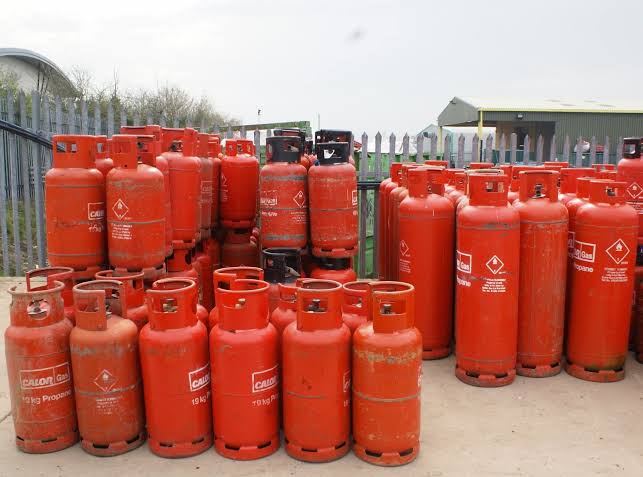
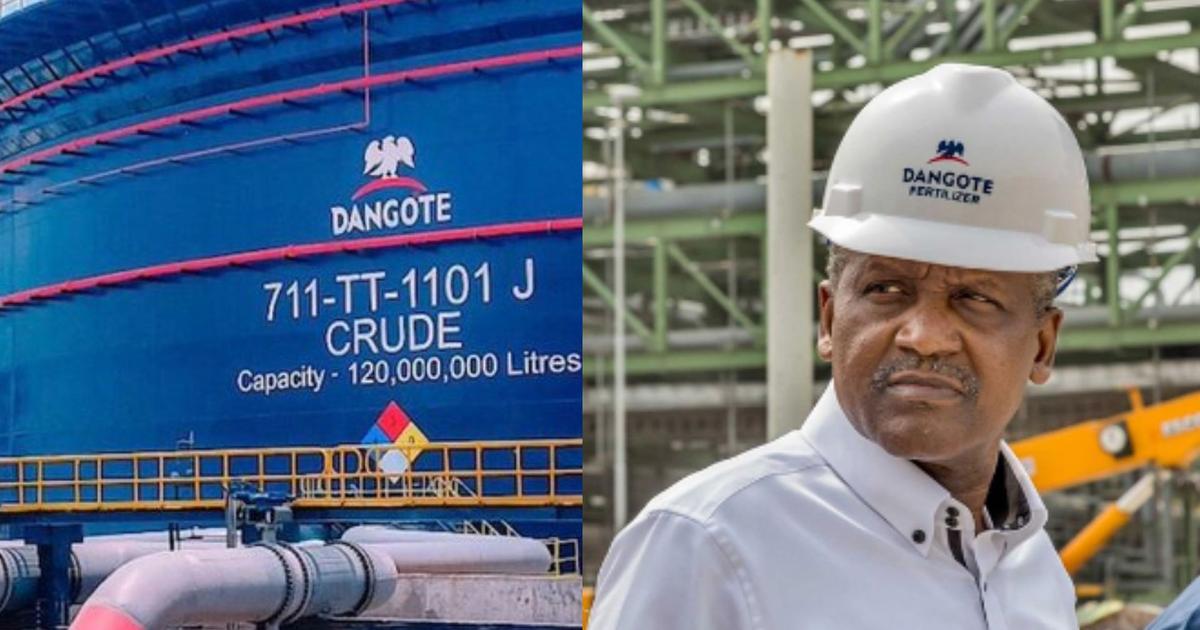
Africa’s largest refinery, Dangote Refinery, has slashed the price of liquified natural gas (LPG), also known as cooking gas to the lowest in 2025, a few hours after cutting petrol rate, a move that has sent joy to Nigerian households.
This move came barely 24 hours after the refinery reduced its petrol prices to N820 per litre from N854.
Checks showed Dangote Refinery lowered the cooking gas price, easing hardship for Nigerians.
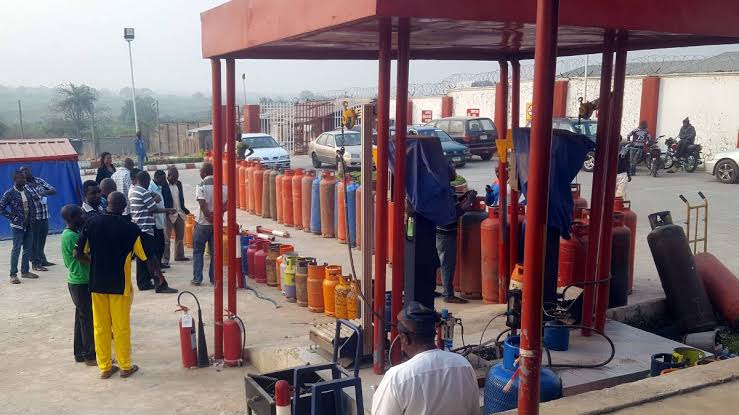
The latest price is also the lowest the refinery has sold cooking gas for in 2025, after rates had previously jumped above N1,000 per kilogramme.
Checks by Legit.ng on petroleumpriceng’s price data show that the refinery slashed the LPG price to N740 per kg, the lowest among depot operators and cheapest in Nigeria.
The latest price is also the cheapest the refinery has sold cooking gas in 2025 after rates jumped above N1,000 per kilogramme.
Experts have hailed the move as exemplary, urging other operators to follow suit. They also attributed the latest price cut to the declining crude oil prices in the international market.
Crude oil prices slump
“International crude oil price is a great factor in setting petroleum product prices globally,” energy analyst and Team Lead at Platforms Africa, Adeola Yusuf, said.
According to him, falling crude prices mean falling petroleum product prices, and vice versa. Findings show that Brent Crude slumped 0.66% on Wednesday, August 13, 2025, to sell at $65.46 per barrel.
WTI fell 0.75% to sell for $62.35 per barrel, while Murban Crude sold for $67.52 per barrel, recording a 0.89% decline.
A reversal of fortune for Nigerians
This development came after Legit.ng reported that cooking gas prices are on the rise again.
For the fifth straight month, cooking gas prices in Nigeria have risen, tightening the squeeze on household budgets.
According to fresh data from the National Bureau of Statistics (NBS), refilling a 5kg cylinder now costs ₦8,323.95—up 1.92% from May’s ₦8,167.43 and a hefty 19.49% more than in June 2024.
The pain is sharper for larger households. A 12.5kg cylinder refill now costs an average of ₦21,010.56, marking a 1.46% rise from May and a staggering 33.52% jump compared to last year’s ₦15,736.27.
Where it’s cheapest and costliest
Oyo, Plateau, and Yobe currently offer the lowest 5kg refill costs at ₦7,100, ₦7,200, and ₦7,600, respectively. For the 12.5kg size, Yobe leads with ₦19,000, followed by Niger (₦19,242.48) and Jigawa (₦20,025.94).
At the other extreme, the South-South zone records the highest average: ₦8,871.63 for a 5kg cylinder and ₦22,179.08 for a 12.5kg refill. In contrast, the South-West pays the least regionally—₦7,960.42 and ₦20,402.42, respectively.
Why the surge won’t stop
Despite being Africa’s largest oil producer, Nigeria imports much of its cooking gas.
This dependence makes local prices vulnerable to swings in the global market. Disruptions in supply chains, increased global demand, and geopolitical tensions have driven up costs worldwide.
The naira’s persistent weakness worsens the situation, as importers pay more to secure foreign exchange, passing the burden to consumers.