

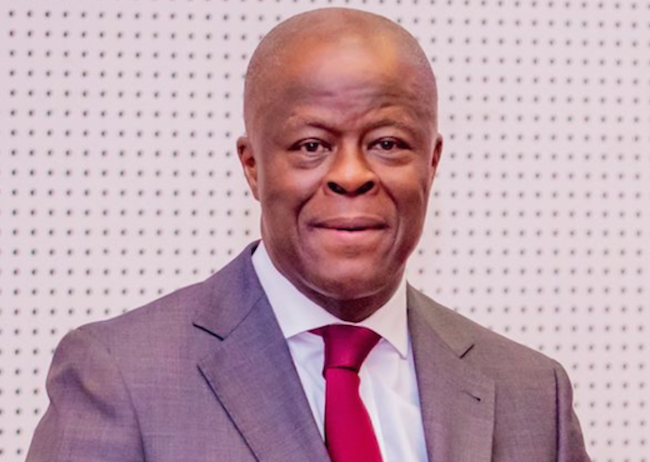
●Viral scenes of jubilation trail finance minister’s sudden removal
● Beyond his ill-health: Insiders point to years of tension between reformist oversight, entrenched habits
There was disconcerting quiet before the announcement, a subtle thinning of presence around Wale Edun. Those who watched closely had begun to notice it long before the memo circulated through Abuja’s bureaucratic corridors; long before the official language of disengagement framed what had already become inevitable: the sack of the Finance and Coordinating Minister of the Economy.
By the time President Bola Ahmed Tinubu signed the directive that ended his tenure, Edun’s fate had already written itself in quieter, more human terms. Power had met its limit in the frail frame of his body. The pressures of governance had collided with the undeniable truth of his mortality.
Now, Wale Edun can rest. That sentence resonates far deeper than the surface reading of a cabinet reshuffle. It gestures toward an untold narrative, one that resists the easy reduction of political failure or administrative inadequacy. Within the corridors of power, there exists a private theatre of endurance, where men entrusted with immense responsibility wage silent battles against exhaustion, strain, and decline. Edun’s departure belongs to that hidden ledger of sacrifice, where service exacts a cost that no public statement fully captures.
A harsher chorus rose from within the ministry he once led. Reports filtered through Abuja of civil servants who greeted the news of his removal with open celebration, their relief unmasked and unrestrained. A video that rippled across private messaging circles captured scenes that unsettled even seasoned observers of Nigeria’s bureaucratic culture: staff members cheering, some chanting, others laughing with a kind of release that spoke to long-simmering discontent.
Within those walls, Wale Edun had never fully secured affection. His style, described by insiders as exacting and unsparing, often collided with a workforce accustomed to looser interpretations of procedure. Discipline, which he pursued with consistency, bred resentment in a system where many had learned to thrive in the grey zones of governance.
Accounts from ministry insiders suggest that this reaction drew from more than personality clashes; it reflected a deeper friction between reformist oversight and entrenched habits. Several officials, speaking discreetly, described a culture that tends to favour ministers perceived as permissive, figures willing to overlook excesses that range from procedural shortcuts to ethically questionable practices. Edun’s insistence on tighter controls, they said, disrupted longstanding patterns and narrowed informal avenues of advantage.
That context lends disturbing weight to reports that some celebrants went as far as parading a symbolic coffin in mockery, staging a grotesque farewell that blurred the line between protest and spectacle. The moment carried an unsettling irony: as Bola Ahmed Tinubu moved to relieve a man burdened by failing health, segments of the very institution he sought to reform marked his exit with a ritual of derision, revealing a fracture within the machinery of governance that no policy memo can easily mend.
Conversations with insiders reveal a trajectory that had been unfolding for months. His health had begun to deteriorate at an alarming rate. The rigours of international travel, policy briefings, fiscal negotiations, and crisis management left him little room for recovery. Each return from global engagements, including the recent meetings at the International Monetary Fund in Washington, carried with it the visible imprint of strain. Those closest to the process understood that, for the former finance minister, the demands of his office had assumed the form of a relentless siege.
He had reportedly sought an exit earlier. That desire, rumoured within trusted circles since late last year, did not spring from fatigue alone. It reflected an awareness that the demands of the office required a steadiness that his condition no longer guaranteed. Yet, governance seldom accommodates abrupt departures, especially in a landscape as delicate as Nigeria’s economic transition. The president needed continuity. The system required time to stabilise. Thus, Edun stayed, holding the line longer than his strength comfortably allowed.
Such decisions rarely attract applause. They reside within the complex interplay of loyalty, duty, and necessity. For Tinubu, the choice to retain him for that period was strategic. Edun represented institutional memory, ideological alignment, and the intellectual foundation behind some of the administration’s most consequential reforms. Removing him prematurely risked destabilising a reform architecture already under intense scrutiny.
Yet, no calculus can indefinitely defer reality. The eventual decision to relieve him of duty emerges, in this light, as an act of both pragmatism and compassion. Political commentary has rushed to frame the move within narratives of failure, invoking statistics, policy lapses, and public dissatisfaction. Those critiques possess their own validity, grounded in the lived experiences of Nigerians grappling with inflation, energy instability, and uneven fiscal outcomes. Still, such readings overlook a deeper dimension: the moment when governance must yield to humanity.
Health, in this story, stands as the decisive arbiter. Accounts from within the ministry describe a leader who continued to engage with policy at a high level even as physical resilience waned. Meetings shortened. Delegations expanded to absorb operational burdens. Trusted aides increasingly shouldered execution. The structure of leadership began to adapt around the constraints of a principal who remained intellectually present yet physically taxed.
This adaptation, while functional in the short term, carried inherent limitations. The office of Finance Minister in Nigeria demands an almost relentless presence, an ability to respond swiftly to economic shocks, negotiate across institutions, and project confidence to both domestic and international stakeholders. Partial presence risks creating gaps that reverberate through the system.
Critics would later describe the finance sector under his watch as faltering, citing irregularities in budget implementation and delays in capital releases. These assessments, articulated by voices such as public affairs analyst Kunle Olubiyo, paint a portrait of administrative underperformance. They point to concurrent budget cycles, weak adherence to fiscal frameworks, and the troubling shortfall in critical sectors such as health, where allocations translated into minimal disbursements.
These realities cannot be dismissed. Yet, they exist alongside another truth: a reform agenda that sought to improve Nigeria’s economic fundamentals under extraordinarily challenging conditions. The removal of fuel subsidies, the unification of exchange rates, and efforts to expand the revenue base required a level of policy boldness that reshaped the nation’s fiscal trajectory. Under Edun’s stewardship, reserves strengthened, trade balances improved, and the groundwork for long-term structural adjustment took firmer shape.
The paradox defines his tenure. Achievements coexisted with hardships. Gains at the macro level contrasted sharply with the daily struggles of citizens confronting rising costs of living. Economic reform, by its nature, often produces delayed benefits, while its pains manifest immediately. Navigating that tension demands both technical expertise and sustained physical stamina. The latter, increasingly, became the missing variable.
Observers within the power sector recall his involvement with the Nigeria Bulk Electricity Trading company, where persistent outages and escalating costs underscored the complexity of reforming entrenched systems. Energy instability fed into broader economic pressures, amplifying public frustration. Each unresolved challenge added another layer to the burden he carried.
Through it all, the signs of decline grew harder to ignore. Colleagues noticed moments of visible fatigue. Engagements that once stretched deep into the night concluded earlier. The once seamless navigation of overlapping responsibilities required more deliberate pacing. None of this diminished his intellectual command, yet governance demands more than intellect alone. It demands endurance, the ability to remain physically present across a spectrum of high-stakes engagements.
Tinubu’s eventual decision reflects an understanding of this distinction. Replacing Edun with Taiwo Oyedele signals a transition designed to sustain momentum while acknowledging the necessity of renewed energy at the helm. Oyedele inherits a landscape shaped by both ambition and turbulence, where the path forward requires careful balancing of reform continuity and immediate relief measures.
Parallel developments unfolded within the housing sector, where Umar Dangiwa also exited his role. His tenure, marked by ambitious projections and persistent structural constraints, struggled to bridge the gap between policy aspiration and practical delivery. The scale of Nigeria’s housing deficit demanded resources far beyond allocated budgets, while land administration challenges continued to impede progress.
These simultaneous departures suggest a broader re-engineering within the administration, a moment of reassessment as governance confronts the realities of implementation. Yet, Edun’s case stands apart, shaped by a personal dimension that transcends policy metrics.
The narrative of his exit invites reflection on the human cost of leadership. Public office often demands a suspension of personal vulnerability. Leaders are expected to embody resilience, to project unwavering strength even when circumstances erode that foundation. Admitting frailty carries risks within political environments that equate vulnerability with weakness. Many choose silence, enduring beyond reasonable limits.
Edun’s journey illustrates the consequences of that silence.