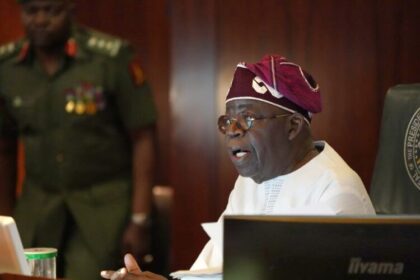

The Nigerian National Assembly has finally passed the 2016 budget into law. The budget, which generated controversy ranging from it being missing and padded, has been delayed for weeks.
Presenting a report on the budget, on Wednesday, Danjuma Goje, chairman senate committee on appropriation, said that the budget was “full of controversy”, but that the senate would not want to delay its passage by adding more controversies to it.
He said that there were lapses in the budget, but that the committee had to work around them. He said that the delay in the passage of the budget had already been given a political hue, hence Nigerians would blame the legislature for any further delay.
In December, the budget proposal presented to a joint session of the national assembly by President Muhammadu Buhari was N6.07trn. A total of N351bn was for statutory transfers, N2.8trn for recurrent expenditure and N1. 8trn for capital expenditure.
The senate, based on the recommendation of the committee, adopted $38 per barrel crude oil benchmark for the budget, as proposed by the federal government. It also adopted a foreign exchange rate of N197 per dollar as proposed by the government.
The senate, however, reduced the total budget sum from N6.07trn to N6.06trn: N351bn for statutory transfers, N1.4trn for debt service, N2.6trn for recurrent expenditure, and N1.5trn as capital expenditure.
Also, the upper legislative chamber observed that the budget was not presented in time to the national assembly, which effected its passage.
It urged the federal government to submit the budget subsequently in strict compliance with the Fiscal Policy Act, and advised that there should be proper consultation between the budget office and the ministries, departments and agencies.
The senate also asked the government to diversify its revenue base, and to shore up capital expenditure and reduce recurrent expenditure.