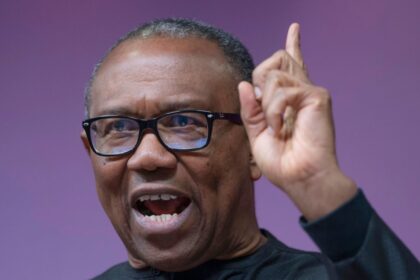


The race for the African Democratic Congress (ADC) presidential ticket has deepened divisions within the party, with supporters of key aspirants sharply split ahead of the primaries.
The internal wrangling is unfolding despite ongoing leadership disputes that have left the party without formal recognition from the Independent National Electoral Commission (INEC).
INEC’s stance follows a Court of Appeal order in a suit challenging the emergence of David Mark, Rauf Aregbesola and others as members of the party’s National Working Committee.
The ADC remains fractured, with three factions laying claim to its leadership structure, leaving many state chapters unable to conduct congresses.
Despite this uncertainty, the party proceeded with its national convention in Abuja on Tuesday without INEC monitoring, a move observers have described as risky.
The development has further exposed cracks within the opposition platform as it prepares for the 2027 general election.
At the centre of the growing tension are three major political figures: Atiku Abubakar, Peter Obi and Rabiu Kwankwaso, all of whom are believed to be interested in the party’s presidential ticket.
The trio, who recently defected from different political parties, have become rallying points for competing interests within the ADC.
While Atiku’s camp has proposed a joint ticket with Obi, the idea has been strongly rejected by Obi’s supporters.
An ally of Atiku, Dele Momodu, argued that pairing both politicians would strengthen the opposition, citing their previous alliance in 2019.
“I’d pair him (Atiku) with Peter Obi because they worked together in 2019,” Momodu said, adding that such a combination would attract broader electoral support.
However, the Obi camp dismissed the proposal outright, insisting that the presidency should be zoned to the South.
The Coordinator of the Obedient Movement, Tanko Yunusa, maintained that zoning remains critical to the party’s chances in 2027.
According to him, once the ticket is zoned to the South, Obi should emerge as the candidate and be paired with Kwankwaso.
He argued that Obi enjoys widespread acceptance within the party and warned that failure to zone the ticket appropriately could cost the ADC the election.
“It’s a Southern presidency… anything short of that will only lead to defeat,” Yunusa said.
There is also a growing perception within the party that Atiku, given his long political history, may have an advantage in a competitive primary.
This has heightened concerns among Obi’s supporters, who believe zoning the ticket to the South would level the playing field.
Meanwhile, Obi has reiterated his opposition to what he described as “transactional” primaries, warning that he would not participate in a flawed process.
Reacting to the growing tensions, the ADC spokesman, Bolaji Abdullahi, assured party members that all aspirants would be given equal opportunity.
He said the party remains committed to a transparent process despite its internal challenges.