

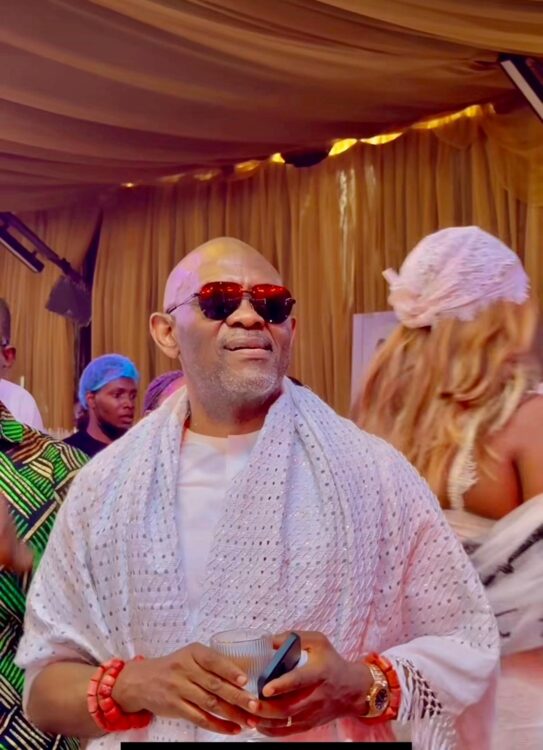
● Governors, lawmakers, industry leaders pay final respects
● Why patriarch’s burial drew Nigeria’s most recognisable names
Grief arrived in Onicha Olona dressed in silk and silence. It persisted with a hush that felt almost ceremonial, as though the earth itself prepared to receive a story returning to its source.
Beneath canopies that fluttered like soft invocations to the sky, a patriarch, Sir Israel Ogbue, returned to earth, borne through memory, reverence, and the solemn generosity of a son-in-law whose name has become shorthand for audacity and grace: Tony Elumelu.
Saturday, April 18, unfolded with the cadence of a royal procession. Convoys traced busy paths into Delta soil as governors, senators, captains of industry, and custodians of influence converged with a tenor that felt almost liturgical. They came to honour Sir Ogbue. They came to witness how a man is remembered when his life ripples through others. They came, perhaps most of all, to observe the rare character of wealth and respect when guided by gratitude.
Onicha Olona does not often carry the weight of a nation’s gaze. Yet on this day, the town stood like a stage carved out of time itself. The air held a peculiar stillness, as though even the wind understood the gravity of the departure. Sir Ogbue, elder, father, bridge-builder, had completed his earthly sojourn, and his exit summoned a pageant that felt both intimate and immense.
At the centre of this carefully arranged farewell stood Tony Elumelu, not as the celebrated chairman whose influence spans continents, but as a son, bound by marriage and duty, carrying out a sacred obligation with the quiet precision of a man who understands the demands of legacy. Every gesture of his bore intention and every detail, respect.
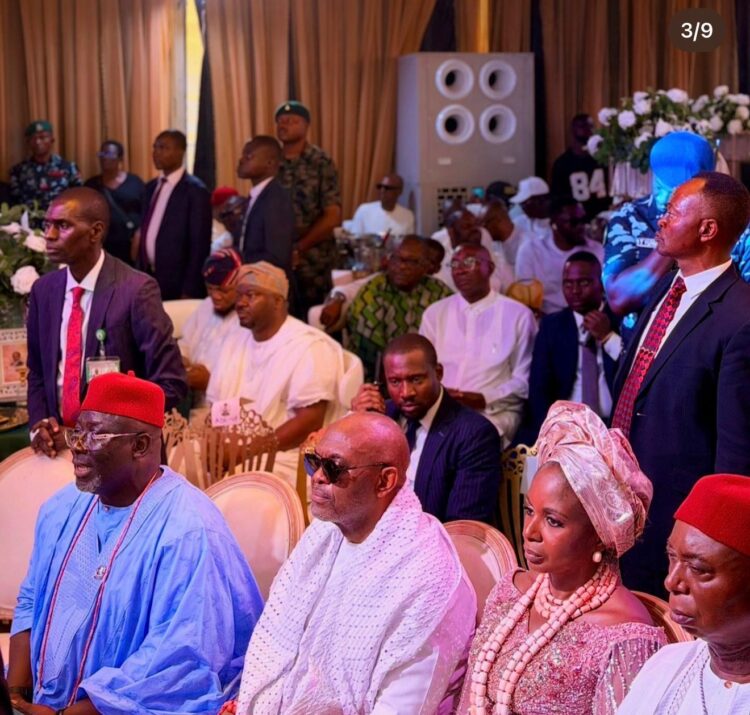
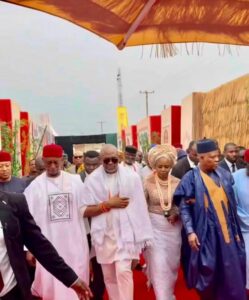
Dignitaries arrived in waves, their presence forming a living mosaic of Nigeria’s political and economic circuit. Vice President of the Federal Republic, Senator Kashim Shettima and Delta State Governor Sheriff Oborevwori stepped into the gathering with the gravitas of office, their presence situating the ceremony within the state’s highest corridors. Nearby, was his predecessor and former Delta Governor Ifeanyi Okowa. Senator Ned Nwoko arrived to grace the occassion with the composed assurance of legislative power, while members of the House of Representatives—Victor Nwokolo and Ngozi Okolie—blended into the gathering, their presence adding presence to an already powerful congregation.
Politics, business, community—these spheres often orbit one another from cautious distances. Yet here they converged without friction, drawn by the gravity of a life well lived and the magnetism of a farewell crafted with uncommon care. The Deputy Speaker of the Delta State House of Assembly, Arthur Akpowowo, stood alongside the Majority Leader, Emeka Nwaobi, while party leaders, local officials, and business associates filled the spaces between, forming a network of allegiance and acknowledgement.
Such gatherings often risk excess, drifting into spectacle stripped of soul. This one carried a different timbre. Elegance never tipped into vulgarity. Grandeur walked hand in hand with restraint. The ceremony unfolded like a carefully composed philharmonic, each note deliberate, each pause meaningful.
At St Peter’s Anglican Church, the night of tribute glowed with a softer light, one that illuminated character rather than ceremony. Voices rose in remembrance, weaving together fragments of a life that had quietly shaped many others. Family members spoke with the tenderness of those who had known the man behind the public figure. Associates offered reflections inspired by the respect they have for the deceased and the truth about his well-lived life.
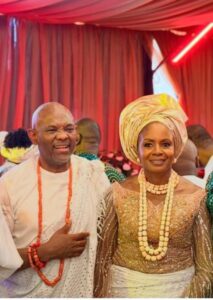
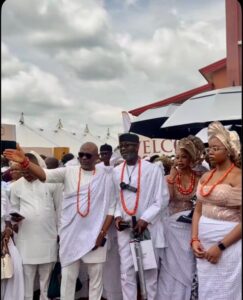
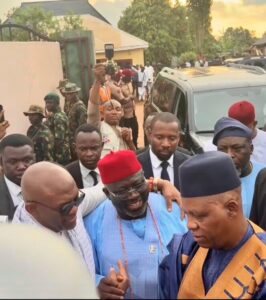
Sir Israel Ogbue emerged through their words as a craftsman of relationships, a man whose influence travelled along the invisible threads of trust. They called him a “Bridge-builder”—such phrases often collapse under their own weight, yet here the description felt earned. He had lived within the discipline of integrity, moving through life with a steadiness that turned ordinary acts into enduring impressions.
The Bishop of the Anglican Diocese of Asaba, Kingsley Obuh, presided with a voice that carried both authority and compassion. His message rose above ritual, settling into the deeper work of reflection. He counselled service, humility, and faith, urging those gathered to chart their own lives along similar lines. Legacy, he reminded them, resides in impact, in the quiet accumulation of good done without expectation.
His words found resonance in the testimony of Ebele Ogbue, who spoke on behalf of the family with a voice weighted by both grief and pride. The portrait he painted was one of discipline, devotion, education, and a steadfast commitment to family. A life fulfilled, he said. A life that had left marks that would not easily fade.
Yet even as the narratives of the departed took shape, another story moved quietly beneath the surface: a story of stewardship, and of how the living choose to honour the dead. Here, Tony Elumelu revealed a dimension often overshadowed by the glare of corporate triumphs. Wealth, in his hands, transformed into a language of gratitude and influence became a tool for remembrance.
The burial bore the hallmarks of meticulous planning, yet it never felt mechanical. It breathed, adapted and reflected warmth and intention. Guests were received with a grace that felt personal, not procedural. Spaces were arranged to encourage both reflection and connection. Even the smallest details seemed to reflect thoughtfulness.
One could read the ceremony as a statement; an assertion of status, and display of capability. Such readings would skim the surface. Beneath the visible grandeur lay something subtler and more enduring: a philosophy of honour. A belief that the passage of a loved one demands a response equal to the depth of their influence.
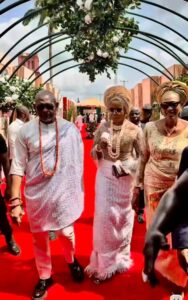
Observers could not ignore the contrast between expectation and execution. Funerals often slip into predictable patterns, bound by tradition and limited by imagination. This one expanded those boundaries without severing their roots. Tradition remained intact, yet it breathed within a broader frame, enriched by resources deployed with sensitivity.
That delicate balance, between cultural fidelity and contemporary expression, defines much of Tony Elumelu’s public life. His ventures in banking and philanthropy reflect a similar synthesis, where African realities meet global ambition. Here, amid the mourning, the same sensibility found expression.
Conversations drifted across the gathering, some hushed, others animated. Stories surfaced—of kindness extended, counsel given, and of moments when Sir Ogbue had stepped in where others hesitated. The memories flowed like a current, bearing testimonies about Sir Ogbue’s life, and asserting into the collective consciousness of those present.
Community members stood alongside national figures, their presence grounding the event in its local roots. They spoke of a man who belonged to them, whose achievements never distanced him from his origins. That dual belonging, local and expansive, resonated in the planning of the funeral itself, which embraced both intimacy and scale.
Time, during such occasions, adopts a different rhythm. Hours stretch and compress, marked less by clocks than by emotion. Soon, the morning blurred into afternoon, and afternoon softened into evening. Each phase manifested its own mood, and its peculiar set of gestures and silences.
Amidst it all, the figure of Tony Elumelu moved with composed purpose. He greeted, he listened, he directed, and he participated. None of his gestures appeared hurried and none of his interactions felt perfunctory. Presence, here, became an act of respect.
Those who have followed his career might recognise the pattern. Precision, attention to detail, an insistence on excellence; these traits have defined his ascent within the corporate world.
Transposed into the realm of personal loss, they acquired a different texture, one shaped by emotion and obligation.
Funerals, at their core, serve as mirrors. They reflect not only the life of the departed but also the values of those who remain. This one reflected a commitment to honour that extended beyond words into action. It suggested that remembrance, when handled with care, can become a form of continuity.
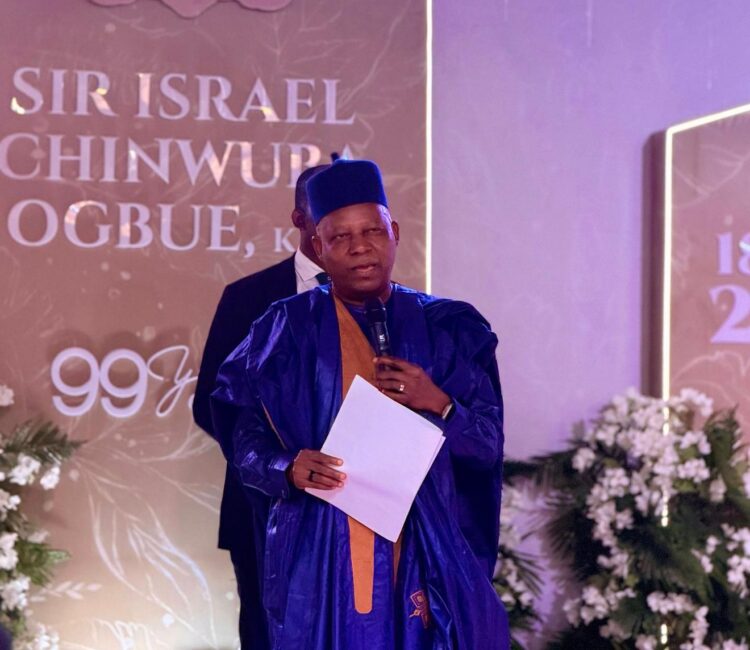
As the final rites approached, a hush settled over the gathering, deeper than before. The rituals unfolded with a solemn grace, each movement carrying centuries of meaning. Earth returned to earth, voices softened, and tears found their way into the open.
Closure, in such moments, remains elusive. Grief does not obey ceremony afterall. It lingers, reshapes, and resurfaces. Yet there exists a measure of solace in knowing that a life has been acknowledged fully, and that its passage has been marked with dignity.
Sir Israel Ogbue’s journey concluded within that embrace of honour. His story, however, did not end. It travelled onward through the memories of those he touched, through the values he embodied, and through the example he set.
And in the careful orchestration of his farewell, another layer of narrative took form, a testament to the enduring power of gratitude. Tony Elumelu offered a lesson that extended beyond the boundaries of the event. Wealth, he demonstrated, finds its highest expression when aligned with respect, and influence acquires meaning when directed toward remembrance.
Onicha Olona will return to its quieter rhythms. The tents will come down. The convoys will disperse. Yet the imprint of that day will remain, rooted in the town’s collective memory. It will be recalled in conversations, in reflections, and in the quiet spaces where stories endure.
Sir Ogbue’s burial became a statement; a farewell transformed into a narrative of connection. A son-in-law stepped into the role of custodian, carrying forward the legacy of a man who had built bridges and lived with purpose. Such moments resist easy summarisation. They exist at the intersection of emotion and expression, where language captures what often feels beyond articulation. Yet one truth stands clear: honour, when rendered with sincerity, possesses an indisputable power. It lingers, resonates, and endures.
Sir Israel Ogbue rests. His memory persists, borne by those who knew him and amplified by the dignity of his departure. And somewhere within that continuum, the figure of Tony Elumelu stands as both participant and narrator, moulding memory into monument, and transforming loss into a lasting credo of respect.